
The following are the key parameters and analysis that need to be paid attention to when choosing an ultrasound bone surgery suitable for the clinic, combined with technical performance, clinical application requirements, and equipment management requirements, to help the clinic make scientific decisions:
1、 Core performance parameters
1. Operating frequency and amplitude
Frequency range: The core parameters of ultrasonic bone cutting machines directly affect cutting efficiency and safety. It is recommended to choose equipment with a frequency between 24.0-35.0 kHz, which can ensure cutting accuracy and avoid damage to soft tissue.
Amplitude control: The main amplitude should reach 20-200 μ m, and the lateral amplitude should be ≤ 30 μ m to ensure precise cutting of bone tissue while reducing vibration diffusion.
2. Output power and mode
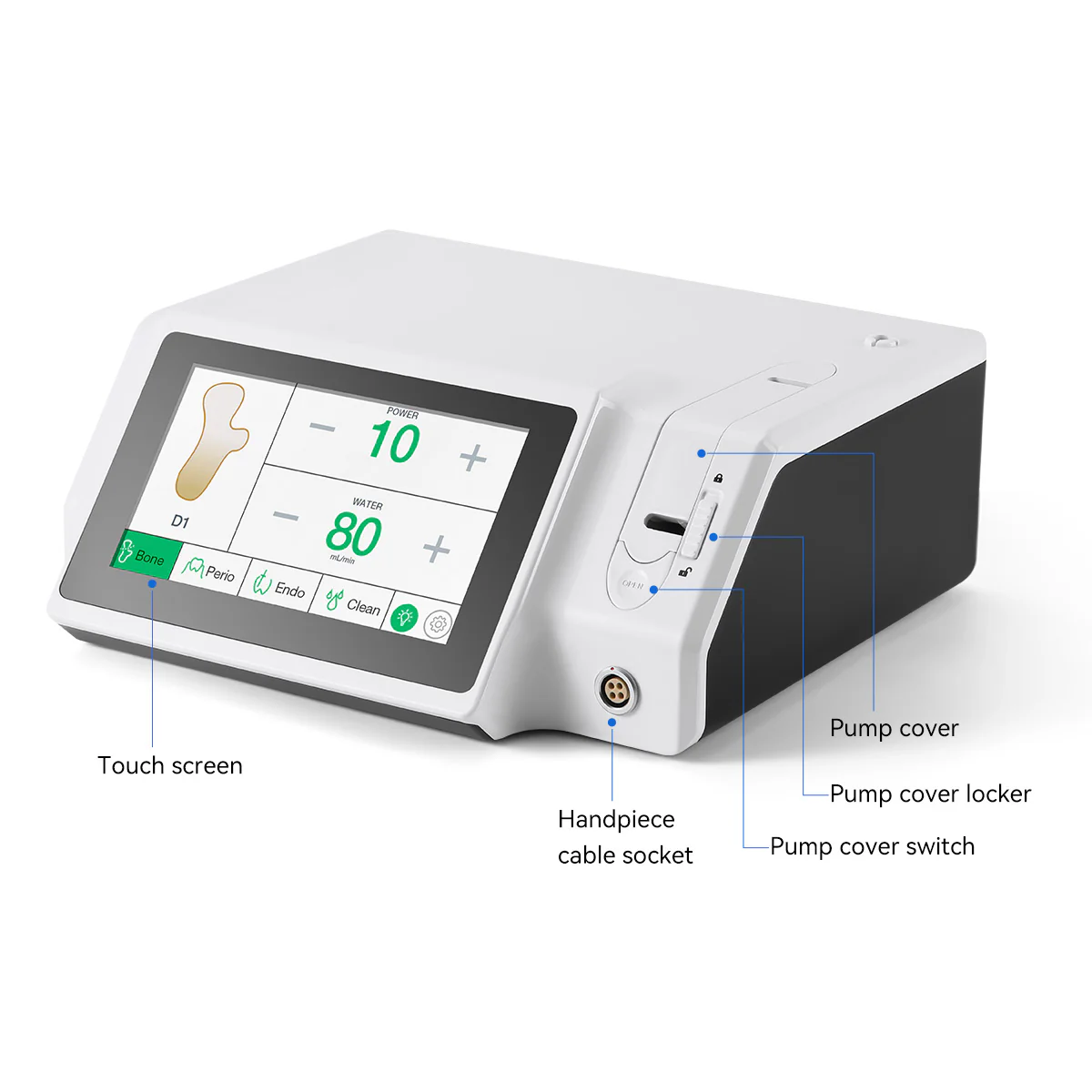
Power regulation: The device should support adjustable power of 3-80W to meet different surgical needs (such as alveolar bone repair and impacted tooth extraction).
Multi functional mode: It is necessary to have modes such as bone cutting, periodontal treatment, and root canal cleaning to improve equipment utilization.
3. Temperature control
Handle temperature: The heat generated by the handle should be ≤ 30 ° C to avoid high temperature burns to the patient's tissues.
Cooling system: silent water supply function (flow rate 25-100 ml/min) and cold cutting technology to ensure clear surgical field and reduce the risk of thermal injury.
2、 Safety and Comfort Design
1. Intelligent control system
Automatic frequency search: The device should be equipped with the function of automatically searching for the best working frequency to improve stability and reduce operational complexity.
Fault alarm: Built in alarm system, real-time monitoring of abnormal situations (such as power overload, insufficient water supply), improving surgical safety.
2. Ergonomic design
Handle weight and grip: Lightweight handles (usually ≤ 200g) can reduce doctor fatigue, and illuminated handle designs (illumination ≥ 230000 Lux) can enhance field lighting.
Operation interface: The Chinese and English LCD screens display current power, water volume, mode and other information, supporting touch or button adjustment, simplifying the operation process.
3、 Configuration and Scalability
1. Types and quantities of work tips
Standard working tip: including at least bone incision, ligament resection, maxillary sinus mucosal separation and other types, with a recommended quantity of 8-14 pieces, covering common clinical scenarios.
Compatibility: Supports the selection of different models of work tips to meet personalized surgical needs (such as pediatric dentistry and complex implant surgery).
2. Mobility and disinfection requirements
Cart design: The wheeled mobile cart facilitates the allocation of equipment between different examination rooms, ensuring the stability of the cart.
High temperature and high pressure disinfection: The handle needs to withstand a high temperature of 134 ° C and a high pressure disinfection of 0.22 MPa, which meets the hospital infection standards.
4、 Brand and after-sales service
1. Brand selection
Priority should be given to well-known brands such as Mectron and Piezosurgery ®), Ensure technological maturity and after-sales service guarantee.
2. After sales service terms
Warranty period: A minimum of 3 years of complete machine warranty (including spare parts) is required, with lifetime maintenance support of 11.
Training services: Suppliers are required to provide operational training (such as equipment installation and maintenance skills) until medical staff become proficient in it.
5、 Adaptability to the usage environment
1. Power stability
Compatible with 220-240V voltage, 50/60Hz frequency, and equipped with voltage regulator to avoid voltage fluctuations affecting equipment lifespan.
2. Environmental requirements: Avoid humid, high-temperature, or dusty environments. It is recommended to use 5 in a stable environment with a temperature of 20-25 ° C and a humidity of 40% -60%.
Summary and Suggestions
Clinics should select equipment based on the following priorities:
1. Clinical requirements: Select the matching operating frequency and power range based on the type of surgery (such as implantation, orthognathic).
2. Budget and maintenance costs: Domestic equipment has high cost-effectiveness, while imported equipment has more mature technology but is expensive.
3. After sales service: Priority should be given to brands that provide long-term warranty and on-site training.
Example configuration recommendation:
Domestic ultrasonic bone scalpel machine (frequency 24-29.5 kHz)+12 working tips+3-year warranty, suitable for small and medium-sized clinics.
Imported high-end models (frequency 26-35 kHz) with automatic cooling system, suitable for large dental specialty hospitals.
By integrating the above parameters, the clinic can efficiently screen for ultrasound bone surgerys that balance performance, safety, and economy. For specific technical details, it is recommended to refer to the equipment manual or contact the manufacturer for sample testing
If you want to know more about ultrasound bone surgery, please click or contact [email protected], Whatsapp +8615347868693.