
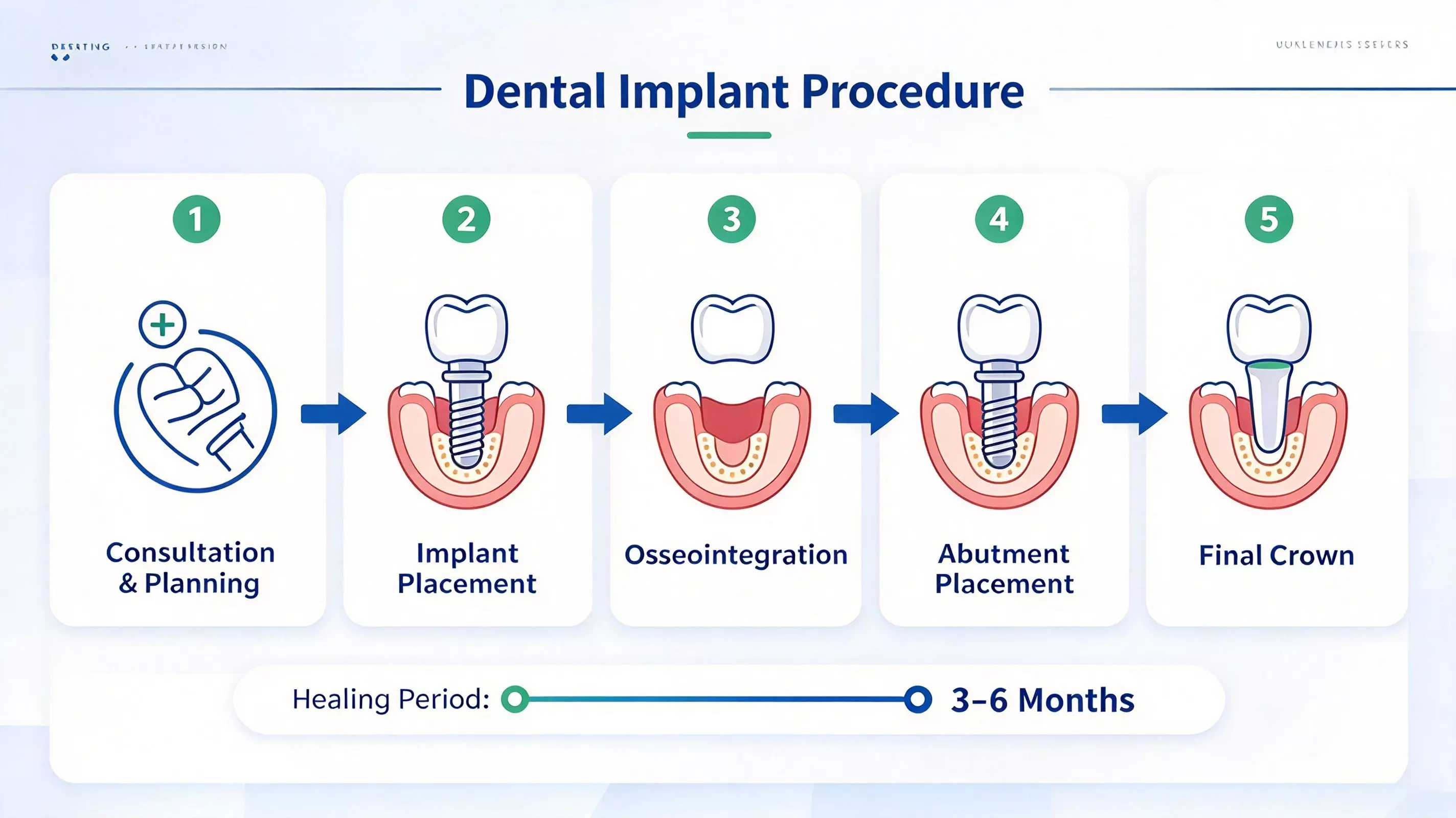
Dental implants are biocompatible artificial tooth roots surgically placed into the jawbone to replace missing natural teeth roots. Made most commonly from medical-grade titanium, these threaded posts act as a stable, permanent foundation for custom artificial teeth, including dental crowns, fixed bridges, or full implant-supported dentures.
Unlike removable dentures or traditional dental bridges that sit above the gumline, dental implants integrate directly with your jawbone through a natural biological process called osseointegration. During osseointegration, living jaw bone grows tightly around the titanium implant fixture, locking it securely in place. This creates a restoration that looks, feels, chews and functions nearly identical to your original natural teeth.
Dental implants are widely considered the gold standard solution for replacing one, several, or a full arch of missing teeth. Whether tooth loss comes from dental decay, gum disease, facial trauma, or aging, implants restore oral function while protecting your long-term jawbone health.
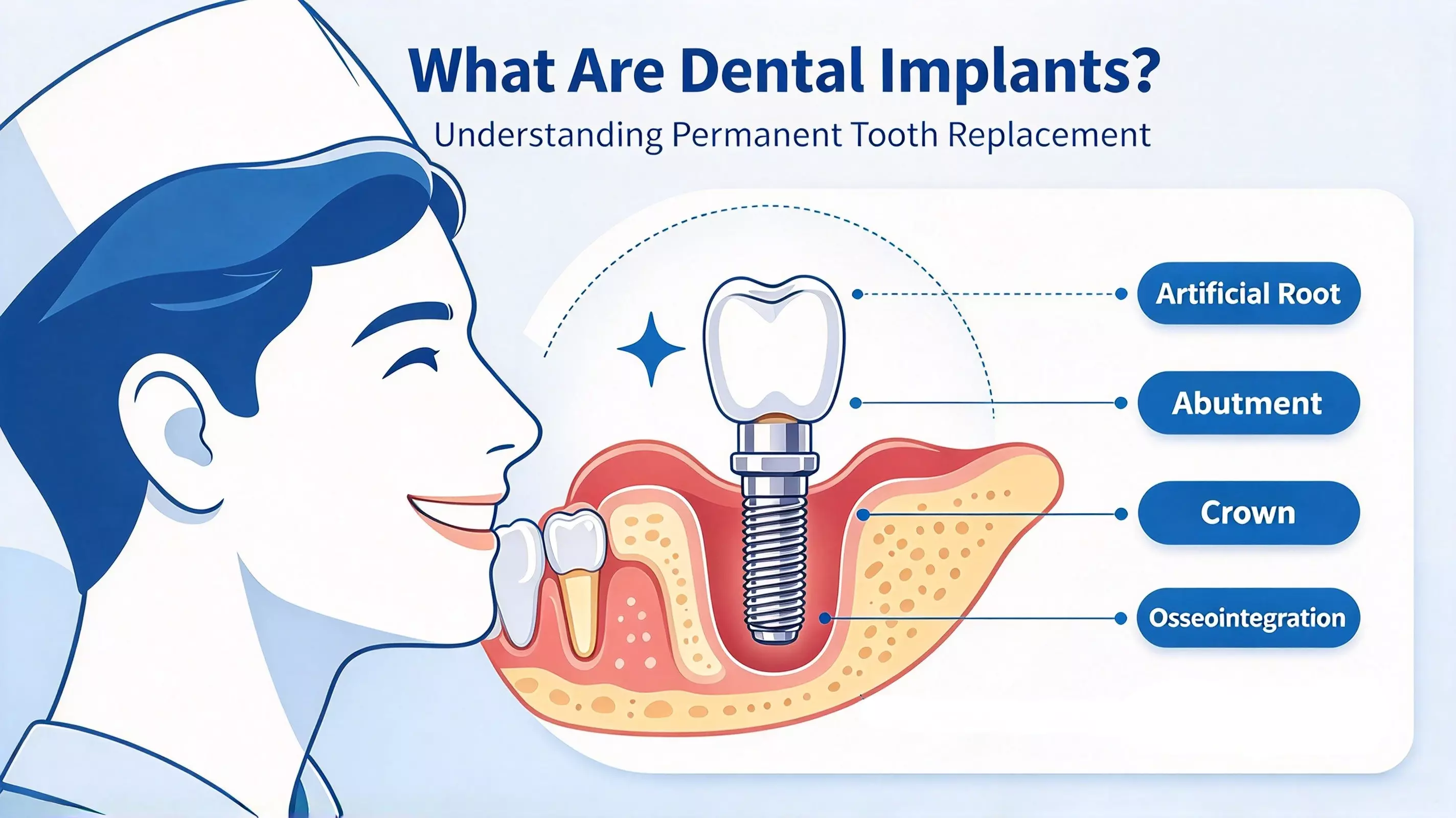
Every complete dental implant restoration has three core parts working together:
Implant FixtureThe screw-shaped titanium post inserted into the jawbone. It replaces the natural tooth root and anchors the whole restoration. Titanium is ideal for implants because it is lightweight, corrosion-resistant, and fully biocompatible, so your body will not reject it. Zirconia implants are also available as a metal-free alternative for patients with metal allergies.
AbutmentA small connector piece that attaches on top of the implant fixture, protruding slightly above the gum line. It connects the buried implant post to the final artificial tooth.
Dental Prosthesis (Crown / Bridge / Denture)The visible, custom-made tooth or teeth. A single missing tooth uses a porcelain crown. Multiple missing teeth use an implant-supported bridge. Patients with no remaining natural teeth can choose full-arch fixed dentures such as All-on-4 implants.
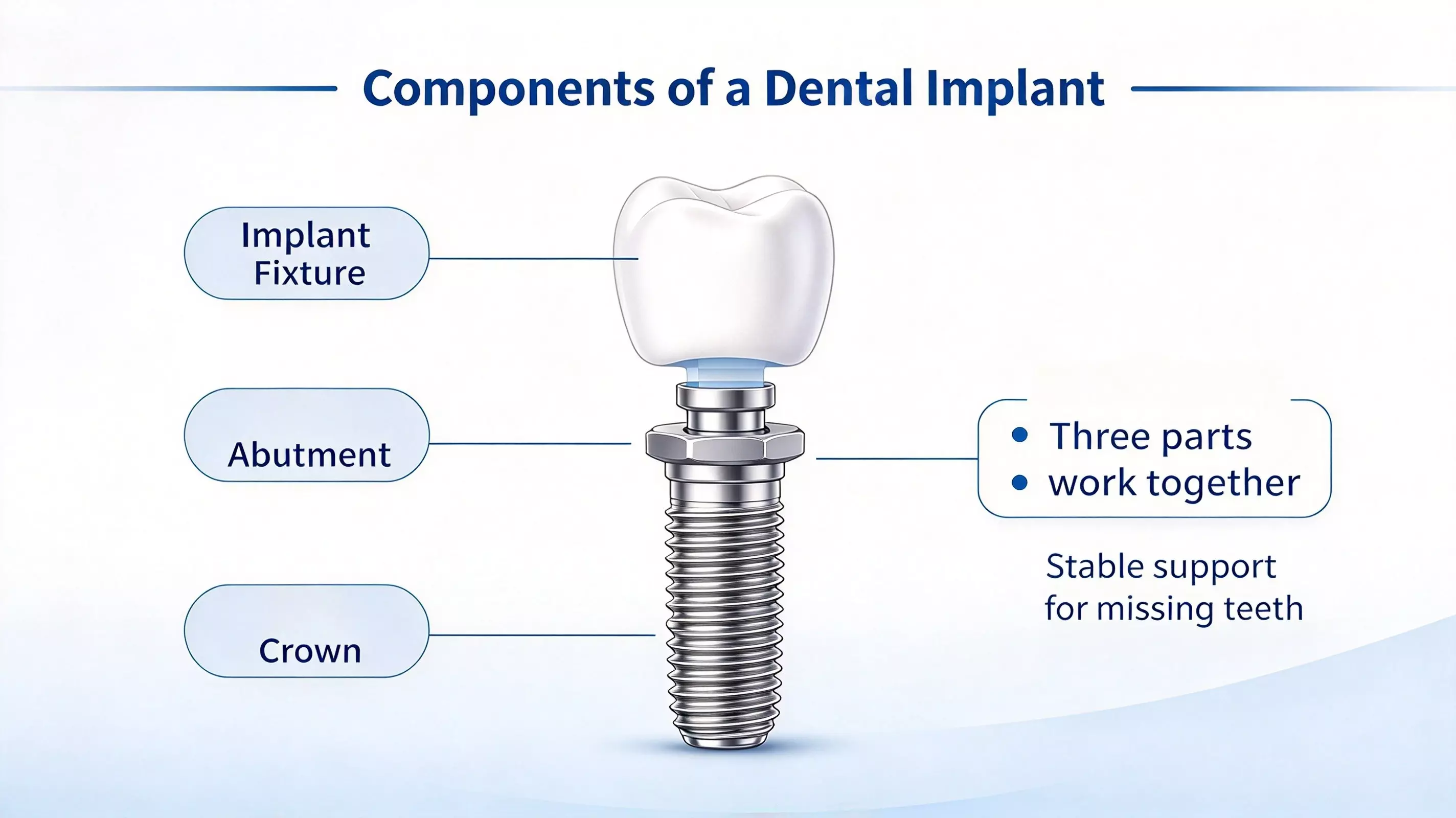
The full dental implant treatment typically happens in multiple stages over several months:
Consultation & Scan: Your implant dentist performs oral exams, 3D CBCT scans to evaluate jawbone density, gum health, and plan implant placement. Some patients with thin bone may need bone grafting first.
Implant Placement Surgery: Under local anesthesia, the dentist places the titanium fixture into the jawbone. Gum tissue is closed for healing.
Osseointegration Healing Period: This healing phase usually takes 3–6 months, allowing bone to fuse firmly to the implant.
Abutment Placement: Once integrated, the abutment is attached to the implant fixture.
Final Prosthesis Fitting: Custom-made crown or bridge is secured to the abutment to complete your new tooth restoration.
Some qualified clinics offer immediate-load dental implants, where a temporary tooth can be fitted the same day as implant placement for suitable candidates.
Key Benefits of Dental Implants
Natural look and feel: Custom porcelain crowns match your natural tooth color and shape for a seamless smile.
Strong chewing power: Implants transfer bite force directly into the jawbone, so you can eat crunchy, tough foods without slipping.
Preserve jawbone volume: When a tooth is lost, jawbone gradually shrinks. Implants stimulate bone just like natural tooth roots and prevent bone resorption.
No damage to adjacent healthy teeth: Traditional bridges require grinding down neighboring natural teeth. Implants are standalone and leave nearby teeth untouched.
Long lifespan: With good oral hygiene and regular dental check-ups, dental implants can last for decades, even a lifetime.
Comfort and speech improvement: No loose dentures sliding, clicking, or needing messy adhesive creams.
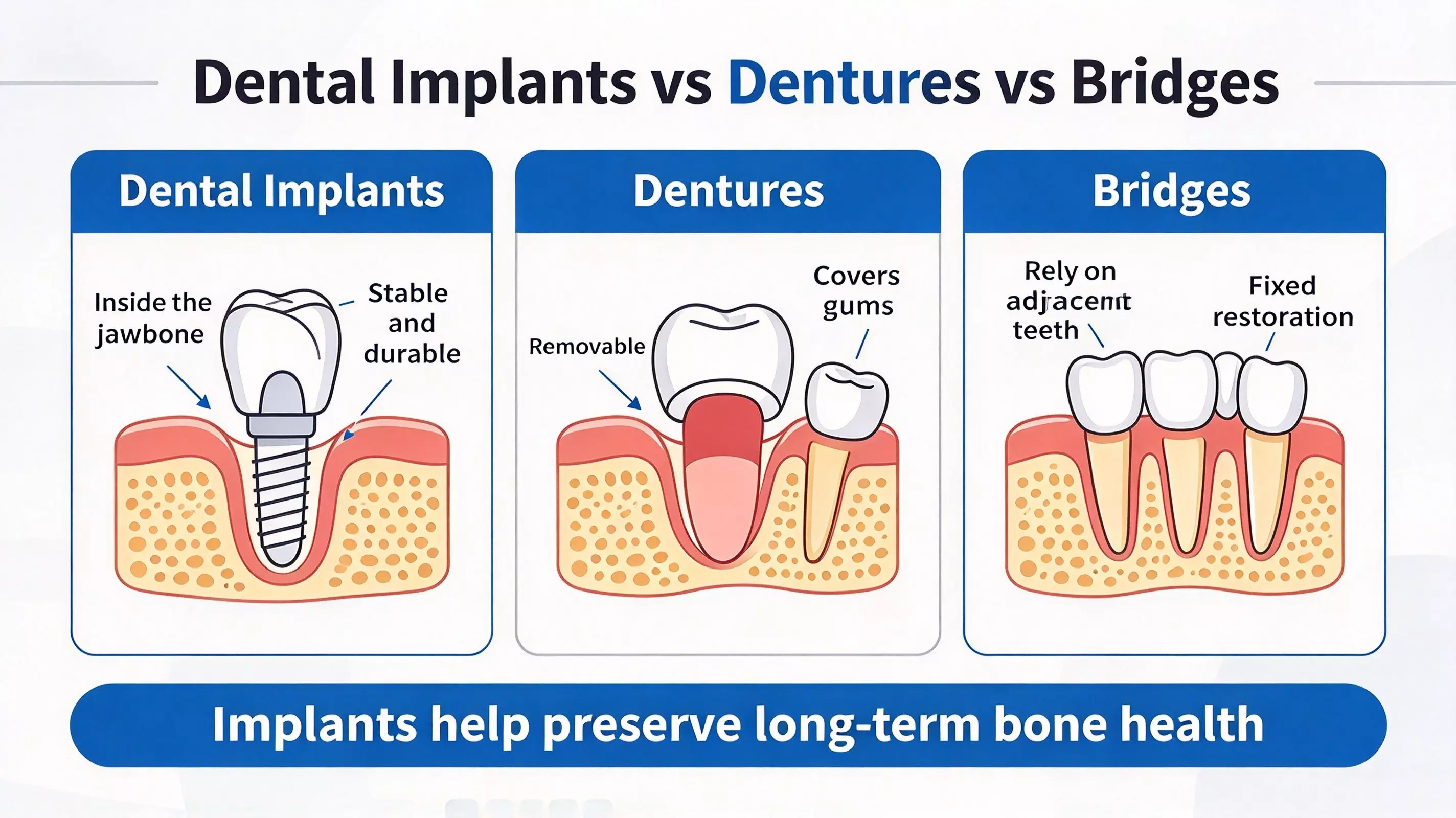
Dental Implants vs Dentures & Dental Bridges
Many patients compare dental implants with other tooth replacement solutions:
Dentures: Removable, lower upfront cost, but can shift while eating or speaking. They do not stop jawbone shrinkage and require periodic replacement or relining.
Traditional Dental Bridges: Fixed restoration, but it relies on grinding healthy adjacent teeth for support and does not preserve jawbone.
Dental Implants: Fixed, stable, preserves bone, no damage to neighboring teeth; higher initial investment but longer-term durability.
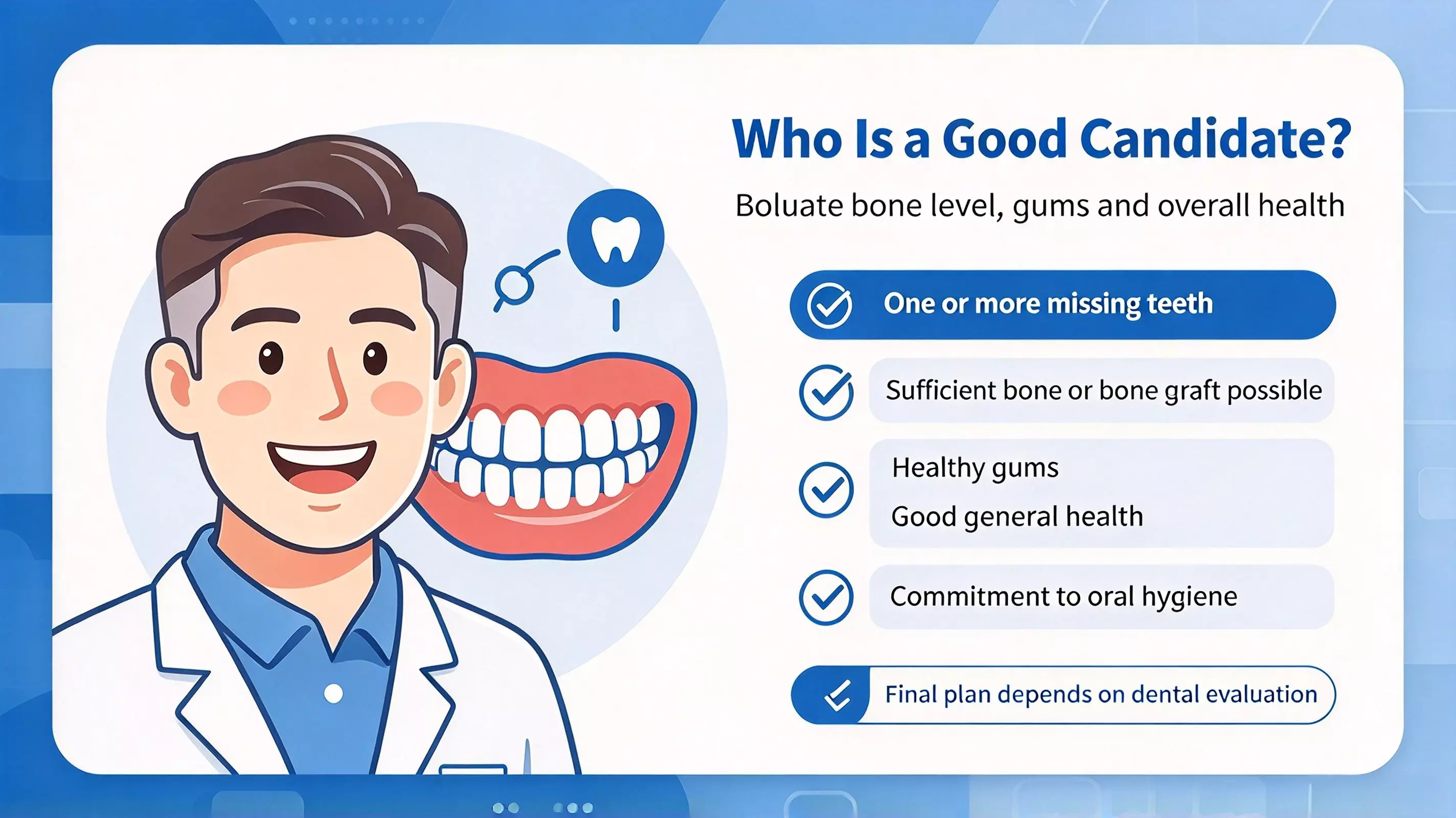
Who Is a Good Candidate for Dental Implants?
Most adults with missing teeth can be candidates, provided: ✅ Sufficient healthy jawbone volume to hold the implant fixture (bone grafting can build bone if needed) ✅ Healthy gum tissue free from active periodontal disease ✅ Good overall general health to undergo minor oral surgery ✅ Commitment to daily brushing, flossing and routine dental visits
Patients with uncontrolled diabetes, heavy smoking habits, certain immune disorders or active oral cancer may need extra assessment before implant surgery.
Frequently Asked Questions About Dental Implants
Q: Are dental implants painful?
Implant placement uses local anesthesia, so you feel no pain during surgery. After treatment, mild soreness and swelling are normal and easily managed with over-the-counter pain medication. Most patients report recovery discomfort similar to tooth extraction.
Q: How long do dental implants last?
The titanium implant fixture itself can last a lifetime with proper care. The porcelain crown typically needs replacement every 10–15 years due to normal wear.
Q: Can anyone get dental implants?
Not everyone qualifies immediately. A comprehensive exam and CBCT scan are required to check bone quality and gum health. Smokers and patients with chronic health conditions will need extra evaluation.
Q: How much do dental implants cost?
Cost varies widely based on the number of implants needed, bone graft requirements, implant material and location. Single tooth implants, All-on-4 full-arch implants and multiple implant bridges each carry different pricing. Schedule a consultation for an accurate personalized quote.
If you have more enquiry, please contact 8615347868693 or [email protected]