
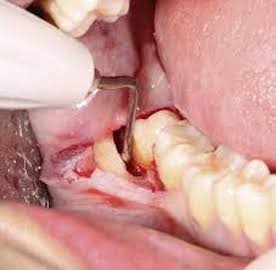
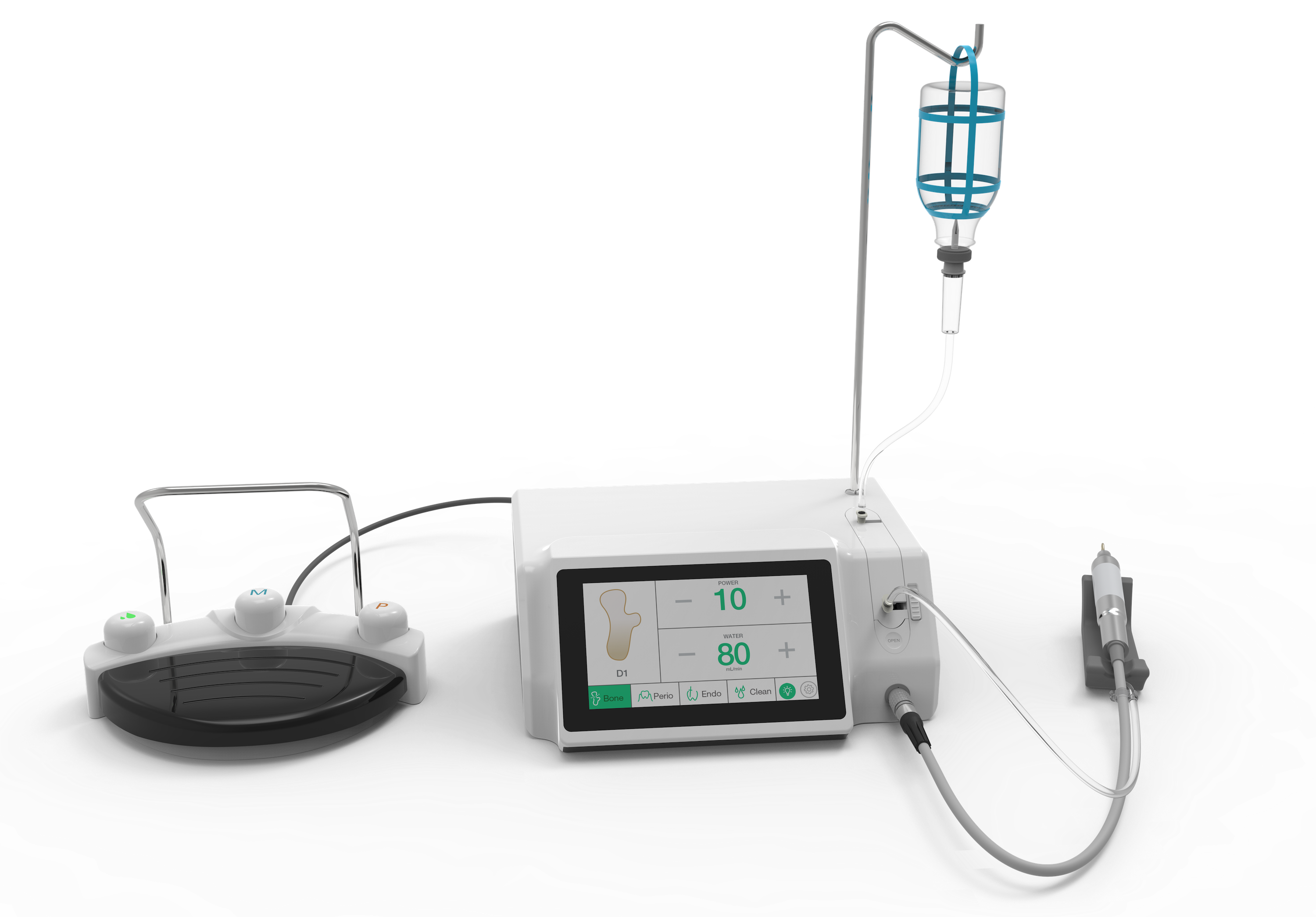
As the core equipment of modern minimally invasive dental surgery, ultrasonic piezo bone surgery has shown significant advantages in complex tooth extraction (such as impacted wisdom teeth and multi-rooted teeth) with its unique working principle and precise operating performance. The following are its five core advantages and scientific basis in minimally invasive tooth extraction:
1. Accurate bone cutting to avoid soft tissue damage
Principle:
Ultrasonic piezo bone surgery selectively cuts mineralized bone tissue (high hardness) through high-frequency ultrasonic vibration (24-29 kHz) without damaging soft tissues such as blood vessels and nerves (low hardness).
Advantages:
Precisely separate the tooth root from the surrounding bone tissue to avoid the risk of accidental injury to the inferior alveolar nerve by traditional turbine drills.
Protect the roots of adjacent teeth and periodontal membranes, and reduce complications such as numbness and infection after surgery.
Data support:
Studies have shown that the nerve injury rate is reduced to less than 0.5% during the extraction of impacted wisdom teeth using ultrasonic piezo bone surgery (3%-5% for traditional methods).
2. Minimally invasive operation, reducing bone loss
Principle:
The cutting force generated by ultrasonic vibration only acts on the contact point, avoiding the vibration spread of traditional drill bits.
Advantages:
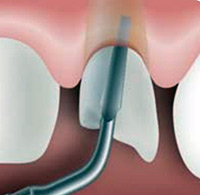
Smaller incisions retain more healthy bone tissue, creating better conditions for subsequent implant restoration.
Reduce bone thermal damage (temperature increase <1°C) and avoid bone cell necrosis.
Comparative data:
The bone temperature can reach 47°C during cutting with traditional turbine drills (exceeding 42°C can cause bone necrosis), and the ultrasonic bone knife can be controlled within 38°C.
3. Reduce intraoperative bleeding and improve visual clarity
Principle:
Ultrasonic vibration simultaneously produces cavitation effect, shrinks blood vessels and reduces bleeding.
Advantages:
Intraoperative bleeding is reduced by more than 50%, the surgical field is clearer, and the operation time is shortened.
Reduce the risk of postoperative hematoma, especially for patients with abnormal coagulation function.
Clinical case:
In complex tooth extraction in patients with hypertension, ultrasonic bone knife can reduce the average bleeding from 20ml to 8ml.
4. Shorten postoperative recovery time
Principle:
Minimally invasive operation reduces tissue trauma and inflammatory response.
Advantages:
Postoperative swelling and pain are significantly reduced, and patients can resume normal diet within 24 hours.
The average healing period is shortened by 30%. Traditional tooth extraction takes 7-10 days, while ultrasonic bone knife can shorten it to 5-7 days.
Patient feedback:
90% of patients reported that they did not need to take strong painkillers after surgery (this proportion is 60% in traditional tooth extraction).
5. Wide range of indications, especially for complex cases
Typical application scenarios:
Impacted wisdom tooth extraction: precise separation of tooth roots and mandibular nerve canal.
Multi-rooted tooth segmentation: avoid damage to maxillary sinus or nasal floor mucosa.
Bone augmentation surgery: minimally invasive bone extraction, reducing donor site trauma.
Contraindications Advantages:
Safe for patients with pacemakers (no electromagnetic interference), while traditional electric drills may be limited.
Ultrasonic bone scalpel vs. traditional turbine drill comparison table
Indicators | Ultrasonic bone surgery | Traditional turbine drill |
Cutting accuracy | 0.1mm level accuracy | Depends on the doctor's experience, with large errors |
Soft tissue protectio | Almost no damage | Easy to accidentally injure nerves and blood vessels |
Postoperative complications | <5% | 10%-15% |
| Operation time | Shortened by20%-30% | Longer |
Patient comfort | Mild vibration, low nois | Strong vibration, high noise |
Usage suggestions
Operation training: It is necessary to master the angle and pressure control of the ultrasonic bone scalpel (it is recommended to receive professional training from the manufacturer).
Equipment selection: It is recommended to choose a model with a real-time cooling system (such as Piezosurgery®, Mectron).
Indication control: It is preferred to use it for complex tooth extractions adjacent to important anatomical structures. Simple cases can use traditional tools as appropriate to reduce costs.
The application of ultrasonic bone scalpel machines not only improves the safety of tooth extraction surgery, but also represents the development direction of minimally invasive dental treatment. For clinics pursuing refined operations, investing in such equipment will significantly improve patient satisfaction and clinical competitiveness.