
Computer-Guided Implantology Systems significantly improves the accuracy and safety of dental implant surgery by integrating mechanical engineering, sensor technology, and digital navigation. Torque control and precise positioning are its two core technologies, jointly ensuring the long-term stability and functional aesthetic effect of the implant. Here is a detailed analysis:
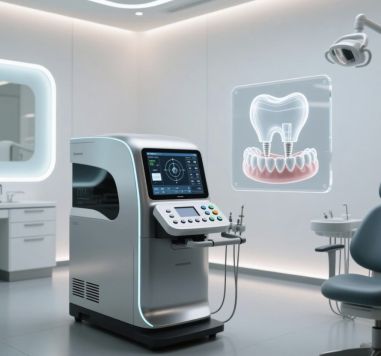
1、 Torque Control: Mechanical Feedback and Bone Integration Optimization
1. Technical principles
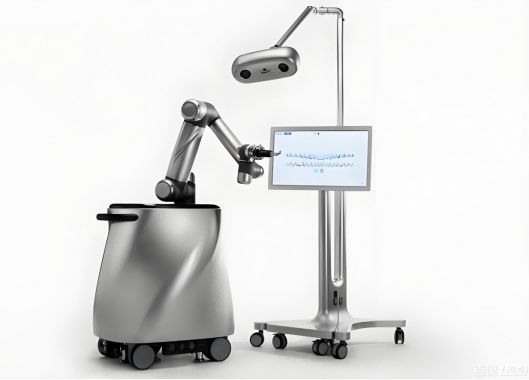
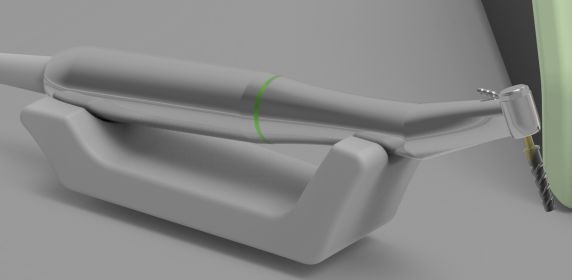
Real time torque monitoring: Real time monitoring of torque values during implant implantation process through high-precision sensors (unit: N·cm), Ensure that the implantation force matches the bone density.
Adaptive adjustment: The system automatically adjusts the upper limit of speed and torque based on bone density (I-IV bone types) to prevent excessive compression or bone fracture (such as torque limitation of 15-35 N · cm for osteoporotic bone and 45-80 N · cm for dense bone).
2. Clinical advantages
Avoiding bone thermal injury: Excessive torque can lead to frictional heat generation (>47 ° C can cause bone necrosis). The digital system maintains bone temperature below 38 ° C by controlling torque and cooling water flow rate.
Improve initial stability: Precise torque matching with bone density increases the initial stability of the implant by 20% -30% (traditional manual operation error rate is about 15%).
Data recording: Automatically generate torque depth curve graph to provide a basis for postoperative evaluation and long-term follow-up.
3. Application scenarios
Immediate load bearing implantation: Achieving immediate load on the implant through precise torque control (such as All-on-4 technology).
Osteoporosis patients: dynamically adjust torque to reduce the risk of intraoperative bone fractures.
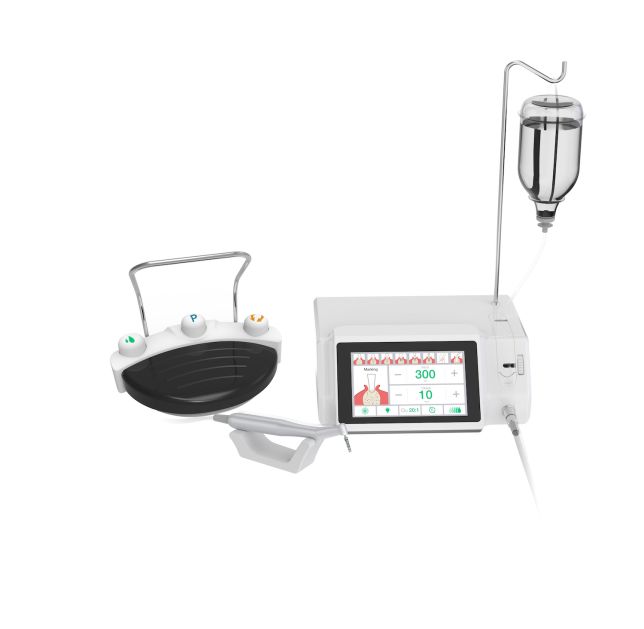
2、 Accurate positioning: 3D navigation and dynamic calibration
1. Technical principles
Preoperative planning: Based on CBCT scan data and intraoral scan model, generate the three-dimensional position (depth, angle, axis) of the implant through CAD software.
Intraoperative navigation:
Optical/electromagnetic tracking: Real time positioning of the patient's jawbone and the position deviation of the implant drill bit (accuracy up to 0.1-0.3mm).
Dynamic calibration: Automatically compensates for small movements of the patient during surgery (such as breathing or swallowing) to ensure that the drill operates along the preset path.
2. Clinical advantages
Avoiding anatomical risks: Accurately avoiding key structures such as the mandibular nerve canal and maxillary sinus, reducing the nerve injury rate to below 0.2% (traditional free hand exercises are used as 3% -5%).
Balancing aesthetics and functionality: Accurately controlling the axial direction of the implant to ensure even distribution of occlusal force, reducing the risk of bone resorption and fracture of the restoration.
Shortening the learning curve: With navigation assistance, novice doctors can reduce implant position errors by more than 50%.
3. Comparison of technical branches
| Technology type | Dynamic navigation system (such as X-Guide, Navident) | Static guide plate guidance (such as 3D printed guide plate |
| Accuracy | 0.1–0.3mm | 0.3–0.5mm |
| Flexibility | The path can be adjusted in real-time during surgery | Completely dependent on preoperative planning and cannot be adjuste |
| Applicable scenarios | Complex anatomical cases, multiple implants | Single simple implantation |
| Cost | High cost (equipment+software about 70,000 to 211,000 USD) | Low cost (guide plate production cost about 70 to 300 USD/case) |
3、 Technical collaboration: linkage mechanism between torque and positioning
Intelligent linkage: When the position of the implant deviates from the preset path, the system automatically reduces torque and alarms to avoid bone damage caused by forced implantation.
Data loop: Postoperative torque and positioning data are uploaded to the cloud, combined with AI algorithms to optimize future surgical parameters (such as predicting the optimal torque based on bone mass).
4、 Future technological trends
AI prediction model: By analyzing historical cases through machine learning, it automatically recommends implant models, torques, and paths.
Augmented Reality (AR) Navigation: Doctors can directly view the position of virtual implants through AR glasses, enhancing the intuitive operation.
Robot assisted planting: The robotic arm performs planting operations with an accuracy of up to 0.05mm, completely eliminating human errors.
summarize
The torque control and precise positioning technology of digital planting machines have achieved a leap from "experience dependence" to "data-driven" through the deep integration of mechanical feedback and 3D navigation. For clinics, investing in such equipment can significantly reduce surgical risks and enhance patient trust, especially in complex cases and high-end implant fields, which have irreplaceable competitiveness. It is recommended to prioritize models that support dynamic navigation and intelligent torque linkage, such as Nobel Guide and Straumann CARES, and provide training for doctors to master digital workflows.
If you want to know more about dental equipment manufacturer, please conact [email protected], Whatsapp +8615347868693.