
In the context of disinfecting and sterilizing dental instruments, the cleaning and maintenance of dental handpieces constitute a top priority. Many may wonder: given their high cleaning efficiency, are ultrasonic cleaners suitable for use with dental handpieces?
In fact, Appendix D of the standard WS506-2016, *Technical Operation Specifications for Disinfection and Sterilization of Dental Instruments*, explicitly states that ultrasonic cleaning is *not* recommended for dental handpieces. The rationale behind this recommendation lies in the interplay between the fundamental principles of ultrasonic cleaning and the unique structural design of dental handpieces.
First, let's understand: How does ultrasonic cleaning work?
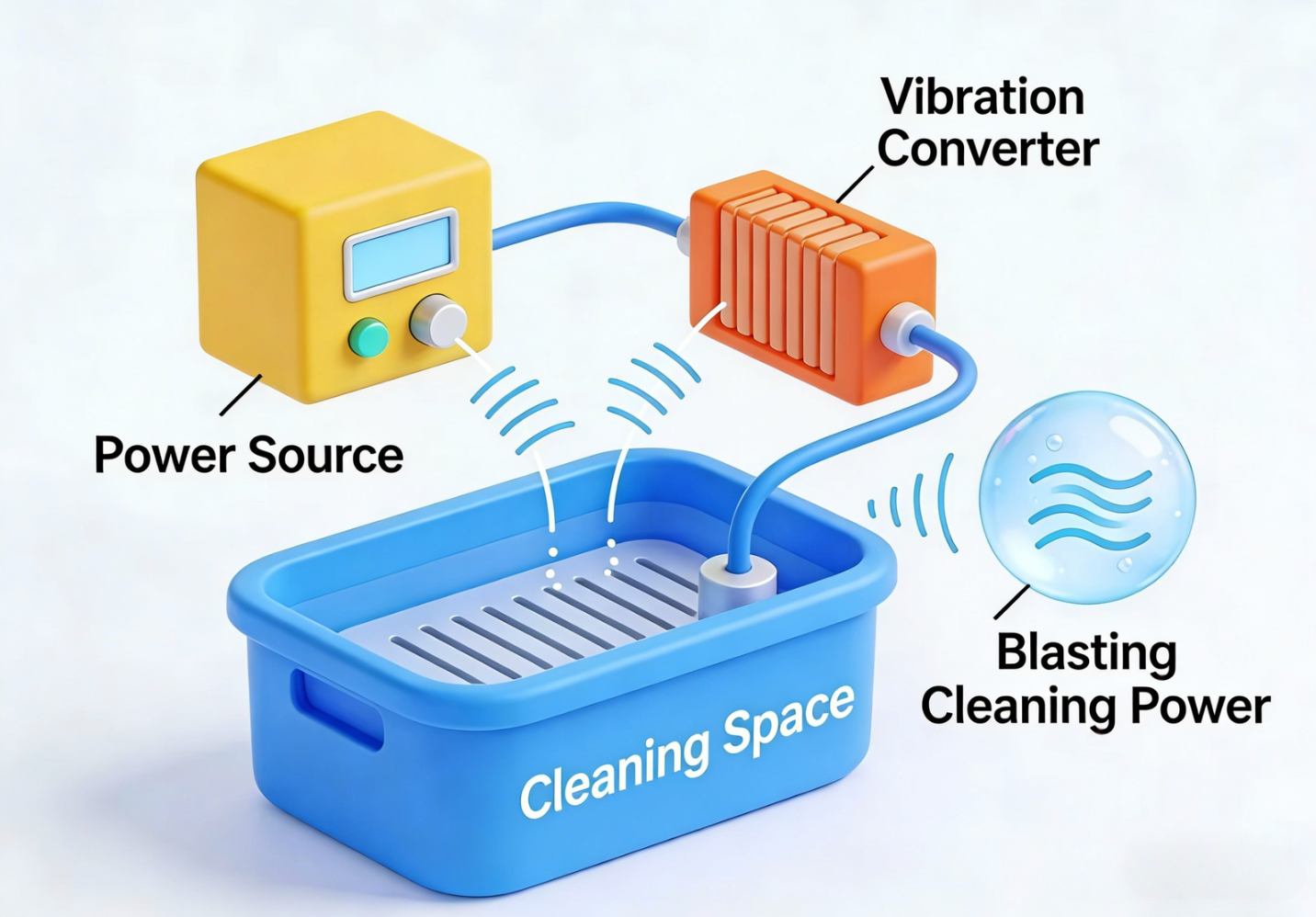
The core principle of ultrasonic cleaning is the phenomenon of "cavitation." Specifically:
The high-frequency oscillating signals generated by an ultrasonic generator are converted by a transducer into high-frequency mechanical oscillations, which then propagate through the cleaning solution. As the ultrasonic waves radiate through the cleaning fluid, they create alternating regions of compression and rarefaction; the fluid experiences positive pressure in the compression zones and tensile stress in the rarefaction zones, stimulating fluid flow and generating tens of thousands of microscopic bubbles. These bubbles form and grow within the negative-pressure zones and then rapidly collapse within the positive-pressure zones—a process known as "cavitation."
When these bubbles collapse, they generate instantaneous high pressures exceeding 1,000 atmospheres, continuously bombarding the surface of the object and causing dirt and debris lodged in surface crevices to rapidly dislodge. In principle, this constitutes a highly efficient cleaning method; however, it is unsuitable for use with dental handpieces.
The Critical Reasons: Three Major Forms of Damage Caused by Ultrasonic Cleaning to Dental Handpieces
Dental handpieces possess intricate internal structures—particularly within their bearing assemblies—that simply cannot withstand the "powerful impact" generated by ultrasonic waves. The specific hazards primarily fall into three categories:
1. **Mechanical Damage and Reduced Service Life:** According to published literature, high-frequency ultrasonic oscillations can cause the ball bearings within a dental handpiece to collide violently against their races. This frequently leads to component wear and structural damage, thereby directly shortening the operational lifespan of the handpiece.
2. **Compromised Core Performance and Clinical Risks:** Practical observations have revealed that following ultrasonic cleaning, the rotational speed of a dental handpiece is often adversely affected, potentially failing to meet the standard speeds required for clinical procedures. Concurrently, the bur-retention force (the grip holding the dental bur) may diminish to varying degrees, introducing significant safety hazards during clinical operations.
3. **Incomplete Cleaning and Ineffective Lumen Decontamination:** Although ultrasonic cleaners are generally well-suited for cleaning instruments with complex external structures, they often prove ineffective when it comes to cleaning the internal lumen systems of dental handpieces. Contaminants lodged within these internal lumens cannot be effectively dislodged or removed, resulting in a failure to meet the mandated cleaning standards required by regulatory guidelines.
The Correct Choice: Standardized Cleaning Methods for Dental Handpieces
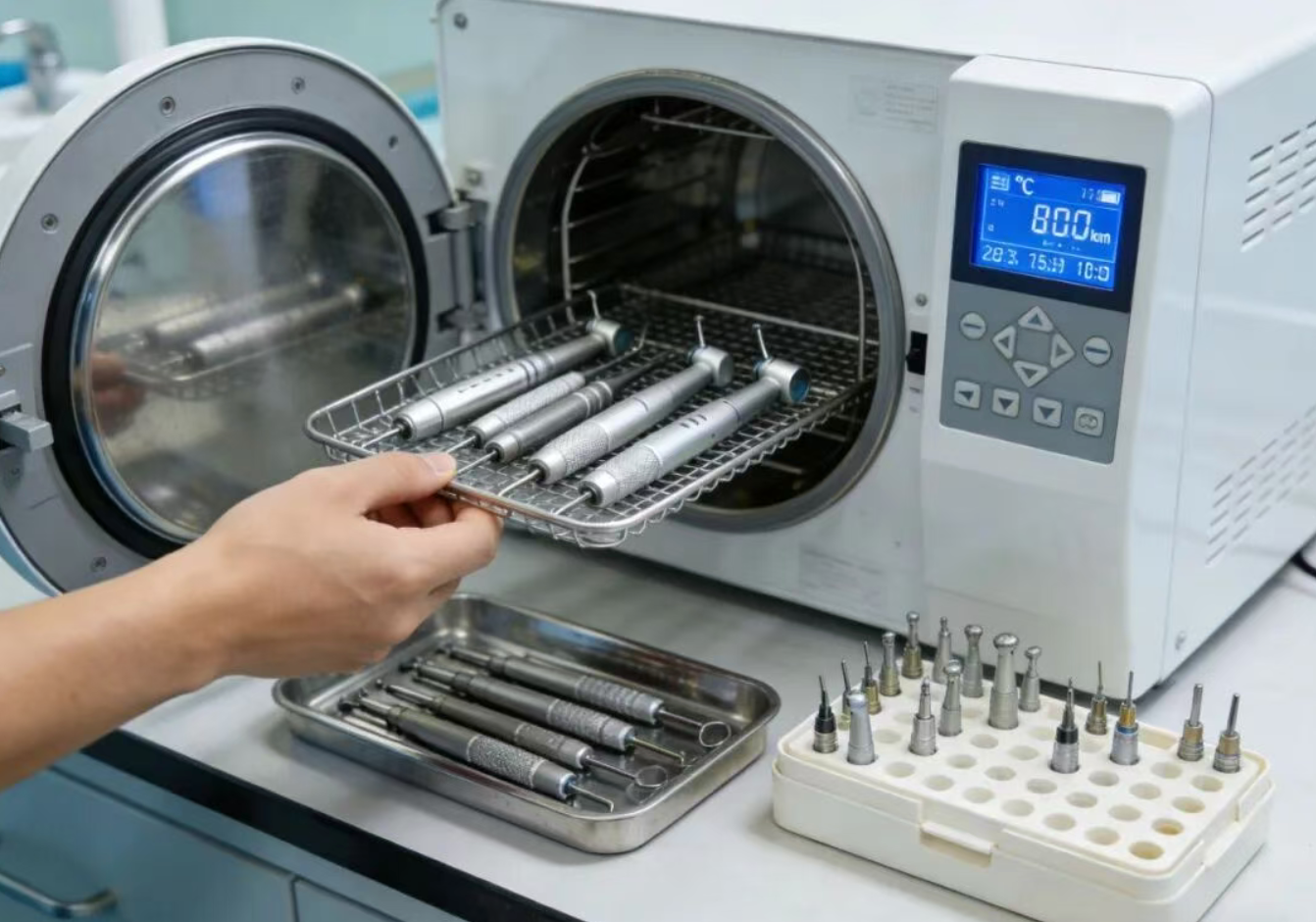
Since ultrasonic cleaning is not advisable, what methods should be used to clean dental handpieces in compliance with regulatory standards? Based on the requirements outlined in the WS506-2016 standard and practical clinical experience, the following two methods are recommended:
1. **Manual Cleaning Method:** Appendix D of the WS506-2016 standard, *Technical Operating Specifications for Disinfection and Sterilization of Oral Instruments*, provides a detailed description of the manual cleaning procedure for dental handpieces. This serves as a fundamental and standardized cleaning approach, allowing for precise control over cleaning force and thereby preventing damage to the instruments.
2. **Mechanical Cleaning Method (Using Thermal Washer-Disinfectors):** Research conducted by Zhang Lei et al. in China indicates that this method exerts a potent cleaning effect on the internal components of dental handpieces. Simultaneously, it effectively preserves the operational performance of the handpieces, making it an ideal solution for facilities with high-volume cleaning requirements.
**Important Reminder: Key Considerations for Mechanical Cleaning**
If you opt for mechanical cleaning, three core requirements must be strictly adhered to in order to guarantee both cleaning efficacy and instrument safety:
* The mechanical cleaning equipment must be fitted with dedicated adapters specifically designed for dental handpieces. This ensures that the flow of cleaning water and air is precisely matched to the internal structure of the handpiece, thereby preventing incomplete cleaning or instrument damage caused by incompatible connections.
* Following mechanical cleaning, the internal tubing of the dental handpiece must undergo thorough drying. This step is critical to prevent residual moisture from compromising the efficacy of subsequent disinfection and sterilization processes, or from causing internal components to rust and deteriorate.
* The selection of a specific cleaning and sterilization method must be guided by the handpiece's performance characteristics, structural design, and the manufacturer's instructions for use. It is essential to select the corresponding cleaning program that is appropriate for the specific instrument; a generic, one-size-fits-all approach should be avoided.
In summary, the proper cleaning and maintenance of dental handpieces are directly linked to both patient safety during treatment and the longevity of the instruments. By strictly adhering to the requirements set forth in the WS506-2016 standard and selecting the appropriate cleaning methods, dental facilities can effectively ensure thorough cleanliness while simultaneously extending the service life of their instruments. For dental healthcare institutions, standardizing instrument cleaning protocols constitutes a vital component in upholding and safeguarding the overall quality of medical care.