
The objective of access cavity preparation is to unroof the pulp chamber, remove coronal pulp tissue, and establish straight-line access to the root canals, while simultaneously preserving healthy tooth structure and ensuring adequate retention and resistance forms for the subsequent coronal restoration. Improper access preparation often complicates subsequent stages of root canal therapy and can lead to treatment failure. Therefore, proper access cavity preparation is a critical step in root canal therapy.
1. Primary Manifestations of Improper Access Cavity Preparation
1.1 Incomplete Access Preparation
The access opening is too small, the pulp chamber roof is not fully unroofed, and the pulp chamber floor and canal orifices are not completely exposed (Fig. 1a).
1.2 Excessive Access Preparation
The access opening is too large; excessive extension after unroofing the pulp chamber creates a ledge on the chamber floor, destroys excessive coronal tooth structure, and results in thin walls and weak cusps (Fig. 1b).
1.3 Perforation of the Pulp Chamber Wall
The direction of access preparation deviates from the long axis of the tooth, causing perforation of the lateral pulp chamber wall; the perforation is typically located high up, above the alveolar crest (Fig. 1c).
1.4 Damage or Perforation of the Pulp Chamber Floor
Excessive depth during access preparation destroys the original anatomical morphology of the pulp chamber floor or even perforates it, damaging the periodontal tissues in the furcation area and often creating a communication with the gingival sulcus (Fig. 1d).
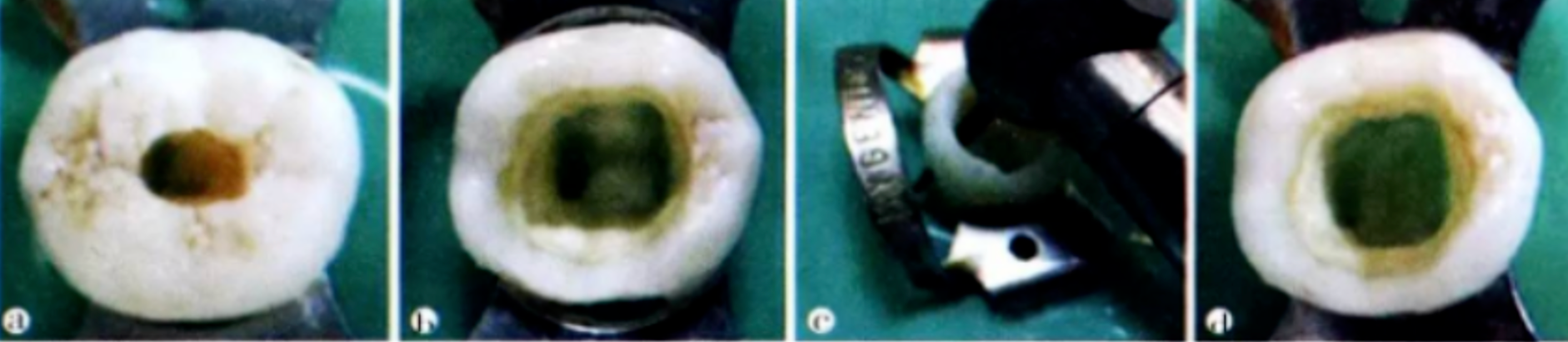 Figure 1
2. Main causes of improper access cavity preparation
2.1 Unfamiliarity with pulp chamber anatomy
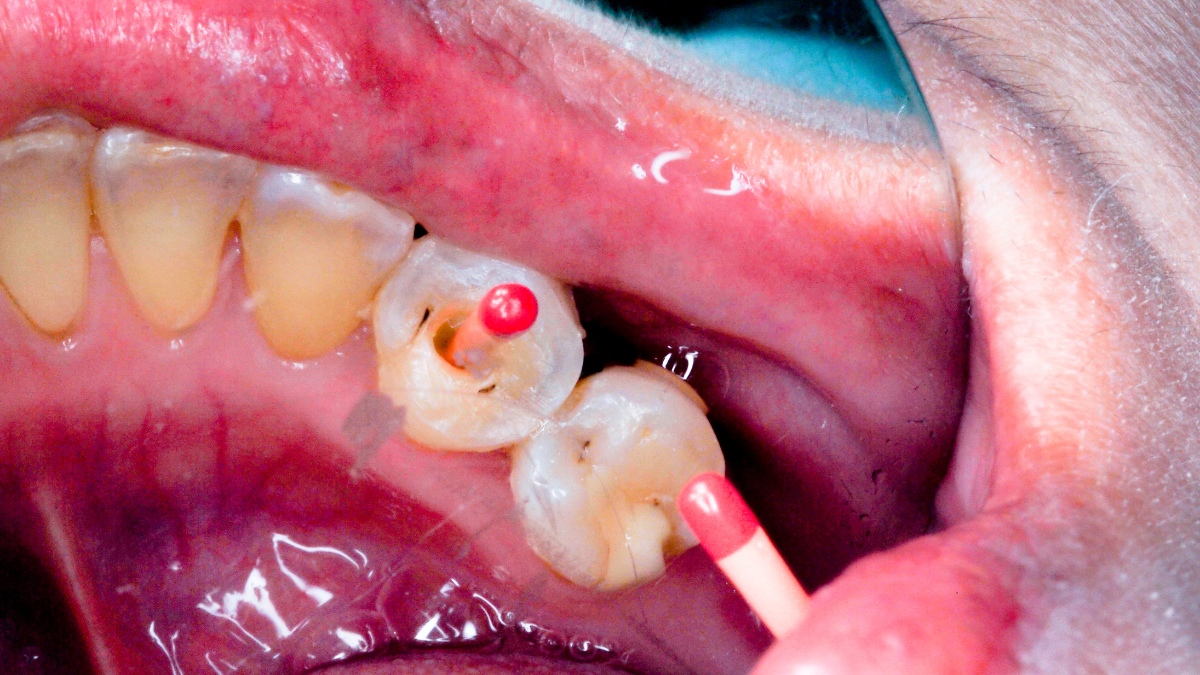
Pulp chamber anatomical characteristics vary by tooth position; consequently, the design of the access opening differs accordingly. A lack of familiarity with the specific anatomical morphology of the pulp chamber for a given tooth makes it difficult to design an appropriate access outline, leading to the procedural errors mentioned above.
2.2 Failure to consider physiological and pathological changes in the pulp chamber
Pulp chamber morphology is not static; factors such as aging, external physical and chemical stimuli, and carious lesions can alter its shape. Changes—such as reduced pulp chamber volume, a decreased distance between the pulp chamber roof and floor, and calcification obstructing root canal orifices—increase the difficulty of access preparation (Figure 2). Inadequate preoperative assessment that fails to account for these physiological and pathological changes often leads to damage to the pulp chamber floor or even perforation during the search for root canal orifices.
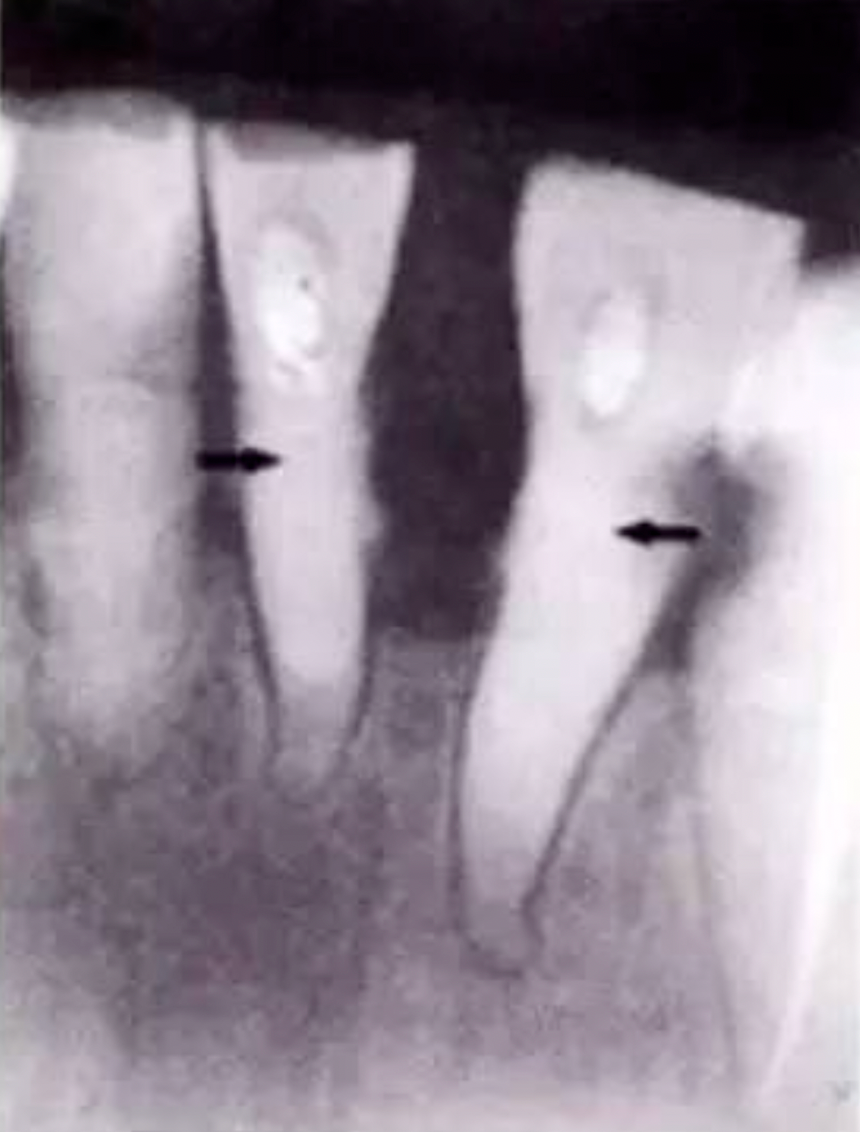
Figure 2
3. Preventive measures for improper access cavity preparation
3.1 Familiarity with pulp chamber anatomy
Mastering the general anatomical characteristics and variations of the pulp chamber, and designing an appropriate access outline based on the anatomical patterns specific to each tooth position, are essential prerequisites for establishing an ideal access opening. The following steps should be taken:
3.1.1 Designing the access outline based on tooth-specific pulp chamber anatomy
Before treatment, the clinician must assess the pulp chamber morphology of the affected tooth. Based on the tooth position and general anatomical patterns, the clinician should determine the access entry point and cavity shape. For example, for maxillary central and lateral incisors, the entry point is typically located in the center of the palatal fossa, superior to the cingulum, with a roughly triangular cavity shape; for maxillary premolars, access is usually gained through the central fossa of the occlusal surface, creating an oval-shaped opening (Figure 3) [2].
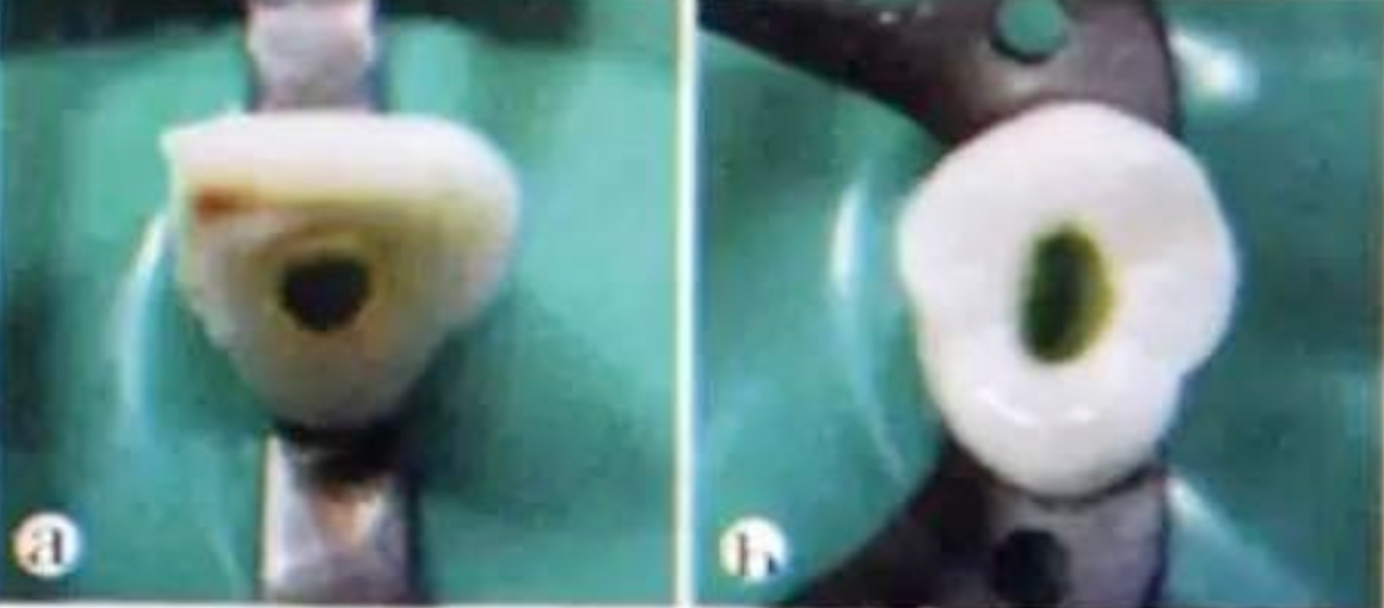 Figure 3
3.1.2 Modification of the access cavity outline based on anatomical variations
Beyond general morphological patterns, pulp chamber anatomy exhibits anatomical variations. For instance, the access cavity for a maxillary first molar is typically located on the mesial aspect of the occlusal surface, presenting a rounded quadrilateral shape with a long buccolingual dimension and a short mesiodistal dimension. However, when a second mesiobuccal canal (MB2) is present, the access cavity outline requires modification—typically involving slight mesial extension—to form an elongated oblique quadrilateral or rhomboid shape (Figure 4) [3]. Similarly, when a mandibular first premolar presents with two or three root canals, the access opening requires appropriate buccolingual extension to ensure adequate exposure of the canal orifices [4].
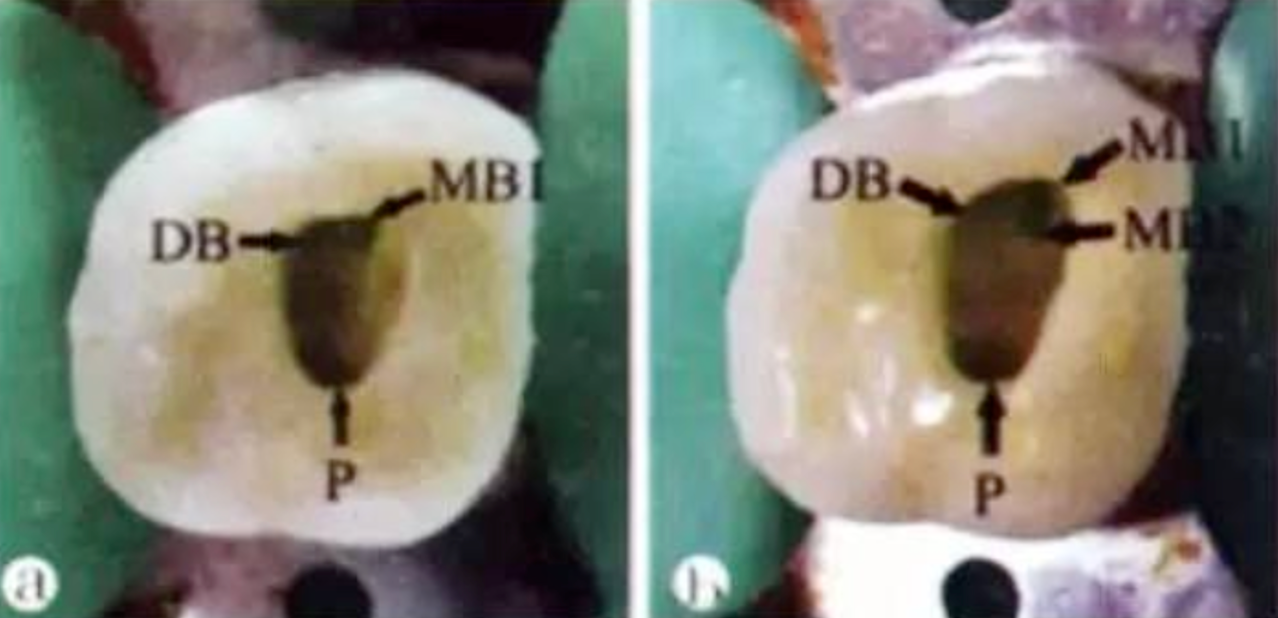 Figure 4
3.1.3 Other anatomical variations
When the affected tooth is tilted or displaced within the dental arch, the access opening direction must be adjusted according to the direction of the displacement. The cavity walls should be kept as parallel as possible to the long axis of the tooth to prevent lateral wall perforation (Figure 5). For teeth with full-coverage restorations, the altered coronal anatomy and restricted field of view increase the difficulty of the access opening procedure; if possible, it is best to remove the restoration before treatment.
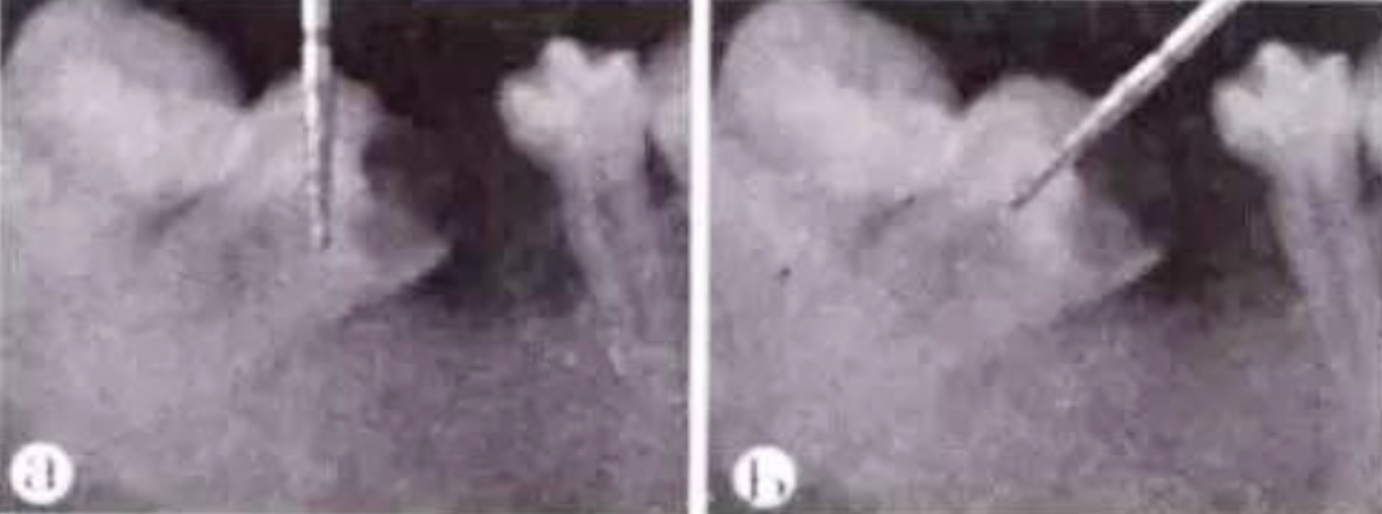 Figure 5
3.1.4 Racial differences
Pulp chamber anatomy varies among different human races. When treating patients from different ethnic groups, the clinician should adjust the access opening design according to the specific circumstances.
3.2 Fully consider physiological and pathological changes in the pulp chamber
Physiological and pathological changes in the pulp chamber primarily manifest as age-related alterations and pulp chamber calcification.
3.2.1 Age-related changes in the pulp chamber
With advancing age, the volume of the pulp chamber decreases, the distance between the pulp chamber floor and roof diminishes, the height of the pulp horns is reduced, and the distance between root canal orifices increases (Figure 6) [5].
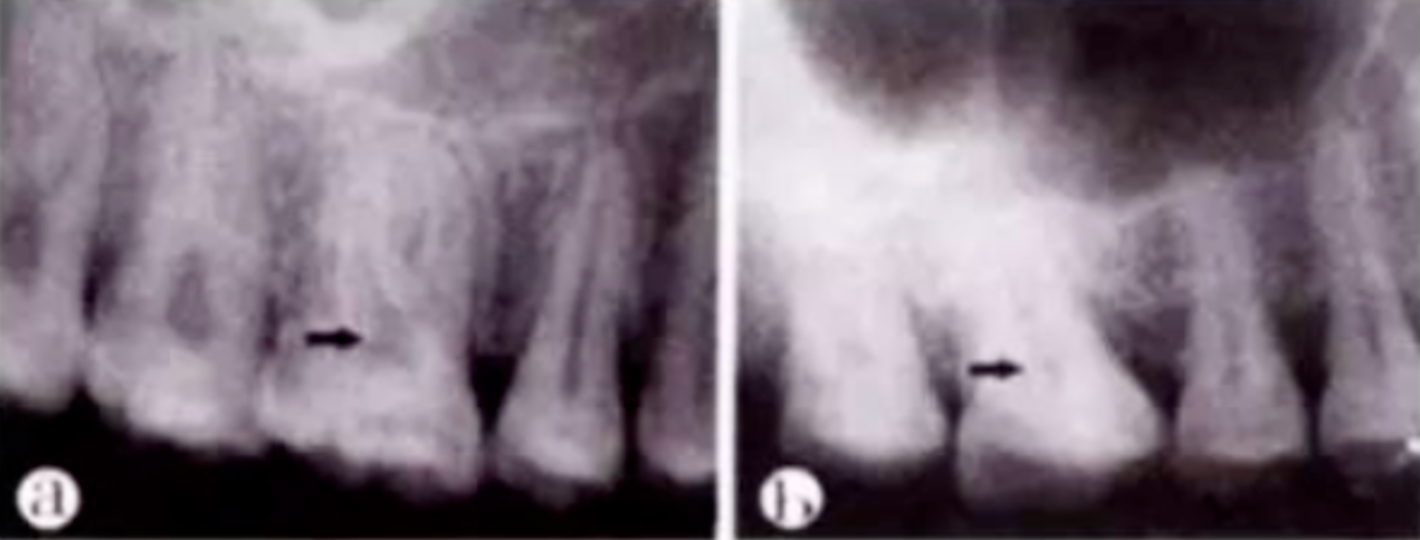 Figure 6
3.2.2 Pulp chamber calcification
Physiological or pathological stimuli can cause partial or complete calcification of the pulp chamber; partial calcification often manifests as pulp stone formation (Figure 7).
These changes alter the morphology of the pulp chamber and increase the difficulty of the access opening procedure. Failure to establish a clear diagnosis preoperatively often leads to damage or perforation of the pulp chamber floor during the procedure. The key to prevention lies in conducting a detailed preoperative examination to identify the characteristics of pulp chamber changes, assess treatment difficulty, and adopt an appropriate access opening strategy.
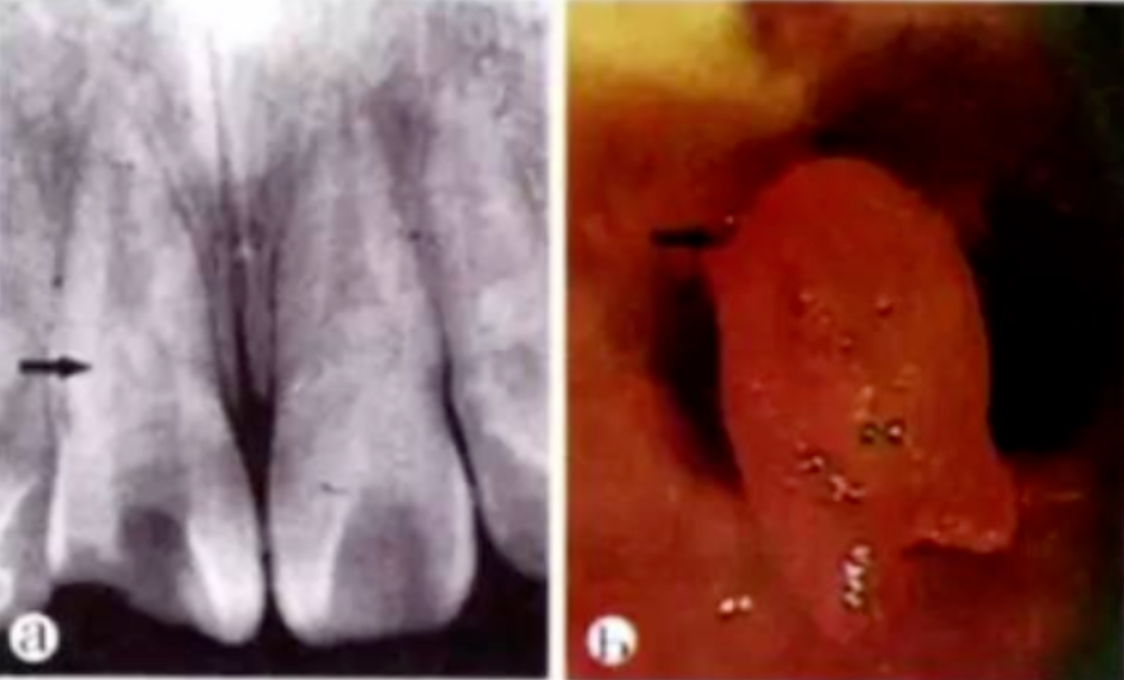 Figure 7
3.3 Appropriate selection of access opening instruments
The equipment and instruments required for access opening primarily include: an operating microscope, high- and low-speed handpieces, various types of burs, DG-16 or CK-17 explorers, excavators, a No. 17 explorer, ultrasonic equipment, and various ultrasonic tips [1].
The operating microscope primarily serves to provide magnification, offering the clinician an excellent field of view. High-speed handpieces are typically used to penetrate the pulp chamber and refine cavity walls during access opening, whereas low-speed handpieces are generally used for caries removal and—in conjunction with Gates-Glidden (GG) burs—for establishing straight-line access to the root canals.
Different bur models vary in cutting characteristics and efficiency; for instance, the Endo Z bur features a non-cutting tip, making it safe to use without damaging the pulp chamber floor, and it is commonly employed for refining cavity walls. Diamond round burs offer uniform cutting action, making them suitable for the initial removal of porcelain from porcelain-fused-to-metal (PFM) crowns while minimizing the risk of porcelain chipping. DG-16 or CK-17 explorers feature sharp tips, making them ideal for probing the pulp chamber and root canal orifices (Figure 8).
Excavators are used to remove carious tissue and necrotic pulp from the pulp chamber. A No. 17 explorer is used to verify whether the pulp chamber roof has been completely unroofed. Ultrasonic devices and various ultrasonic tips are generally used to remove obstructions—such as calcified tissue—from the pulp chamber.
In summary, the clinician must be familiar with the characteristics and indications of various instruments and select them appropriately based on the specific clinical situation to ensure proper access opening and to prevent or minimize procedural errors.
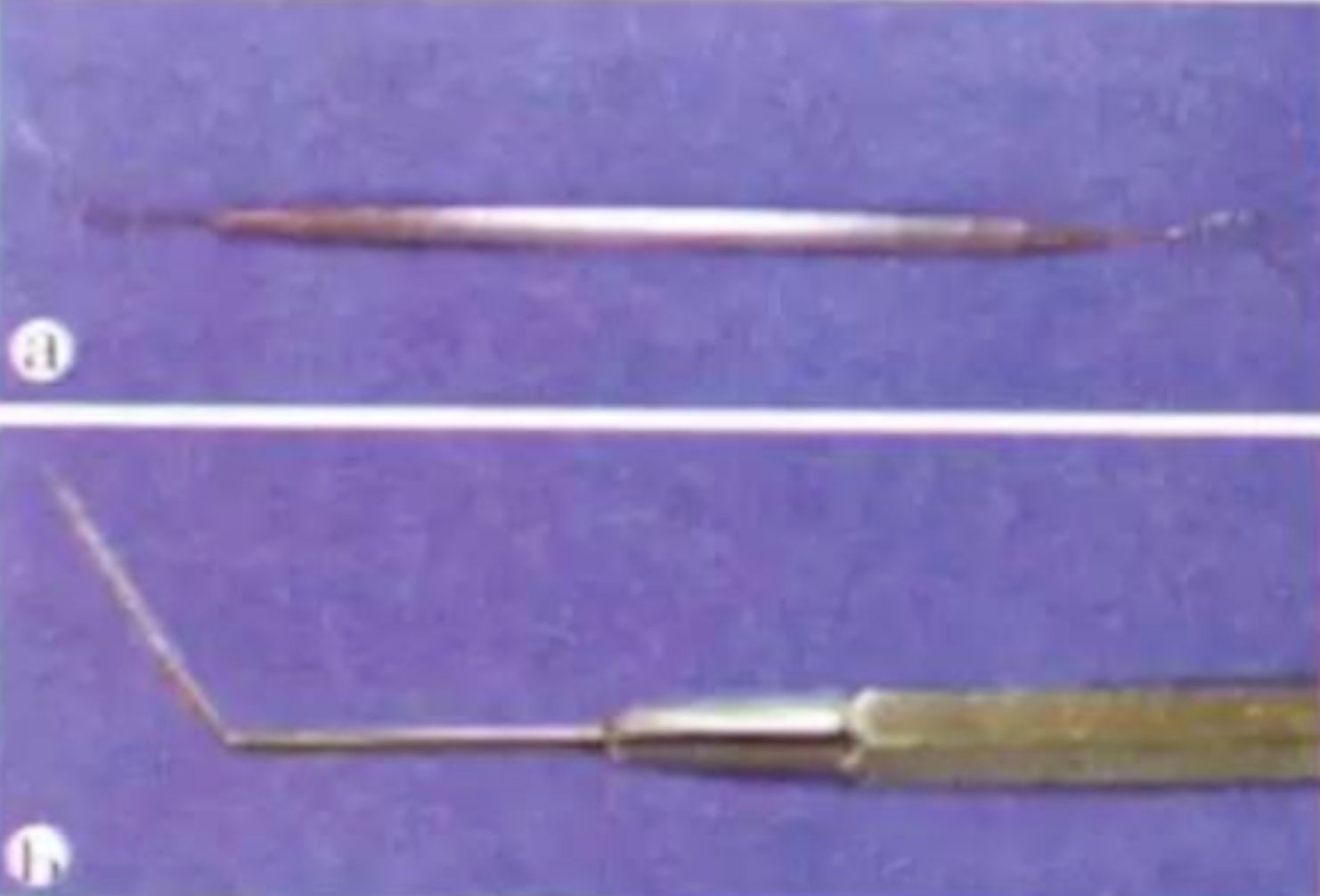 Figure 8
4. Management of Major Procedural Errors
4.1 Incomplete Access Opening
Incomplete access opening often manifests as an access cavity that is too small, an incompletely unroofed pulp chamber, or inadequate exposure of the root canal orifices. To clarify the situation, first probe the pulp chamber using a triple-bend explorer or a No. 17 explorer; a sensation of catching indicates that remnants of the pulp chamber roof persist. In such cases, redesign the access opening shape based on the tooth's position and extend the cavity accordingly. Next, inspect the pulp chamber floor using a mouth mirror; if the root canal orifices are visible simultaneously without adjusting the mirror's angle, the access opening is adequate. Otherwise, further refinement of the cavity walls is required.
4.2 Excessive Access Opening
Excessive access opening often results in severe damage to the cavity walls—creating thin walls and weak cusps—or over-extension of the pulp chamber floor, leading to the formation of a ledge. This can usually be assessed through visual inspection. The only management approach is to select an appropriate post-endodontic tooth restoration plan based on the extent of the crown defect and the tooth's position. For example, anterior teeth can be restored using fiber posts, resin cores, and porcelain-fused-to-metal (PFM) crowns, while posterior teeth can be treated with post-and-core crowns or inlays.
4.3 Lateral perforation of the pulp chamber wall
Lateral perforations of the pulp chamber wall are generally located coronal to the attached gingiva and communicate with the oral cavity. Diagnosis can be confirmed via visual inspection or microscopy. Management involves repairing the perforation with glass ionomer or composite resin; subsequent full-coverage crown restoration is often feasible, and the prognosis is generally favorable. If the perforation site is located apical to the gingival margin, crown lengthening is recommended to prevent secondary caries.
4.4 Destruction or perforation of the pulp chamber floor
Diagnosis can be confirmed through visual inspection or microscopy, radiographic examination, and the use of an electronic apex locator. While destruction of the pulp chamber floor may not require specific intervention, accidental perforation of the floor during access opening should be repaired promptly using materials such as glass ionomer cement, Super EBA, IRM, resin sealants, composite resin bonding agents, calcium sulfate sealants, or MTA (Figure 9) [6]. Perforations of the pulp chamber floor often communicate with the furcation, damaging the periodontal tissues in the furcation area and connecting to the oral cavity; consequently, the prognosis is poor. Studies indicate that when a pulp chamber floor perforation involves the furcation, the complete healing rate is approximately 30% [7]. Factors influencing the treatment outcome for perforations of the pulp chamber floor or lateral walls include the location, size, and timing of the perforation, the health status of surrounding tissues, and the choice of repair material.
 Figure 9