
Anterior teeth: The incisal edge needs to be prepared with a bevel at a 45° angle to the long axis of the tooth, removing 1.5mm-2.0mm; the labial surface should be reduced by 1.2-1.5mm in thickness, prepared separately at the cervical and incisal areas; the lingual surface only requires a uniform reduction of 0.5mm (if porcelain veneer is needed on the lingual surface, the preparation amount needs to be increased accordingly); the shoulder width is 0.6mm.
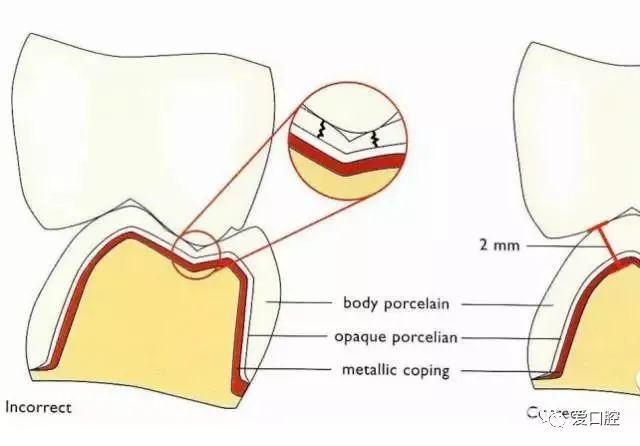
Precautions for All-Ceramic Crown Preparation
All-ceramic crowns should avoid: preparation without a shoulder and preparation with a beveled shoulder. If a zirconia restoration is prepared without a shoulder or with a beveled shoulder, it may result in an excessively thin margin, leading to a risk of fracture. Simplify the occlusal surface contours: The degree of undulation of the occlusal surface needs to be simplified.
An open angle of 120-140° on the occlusal surface ensures accurate replication of the inner crown surface during the milling process, thus achieving a perfect fit. Determining the insertion direction: When determining the insertion direction, the taper of all abutment teeth axial surfaces should be at least 2-4°, which is very important, especially for fixed bridges.
During the scanning process, excessively steep slopes will be treated as vertical and cannot be accurately displayed in the software. Shoulder position: The shoulder position should not be prepared too deep, a depth of 0.3mm subgingivally is recommended. If it is too deep, 1. it is detrimental to periodontal health; 2. it hinders the removal of excess adhesive during bonding.
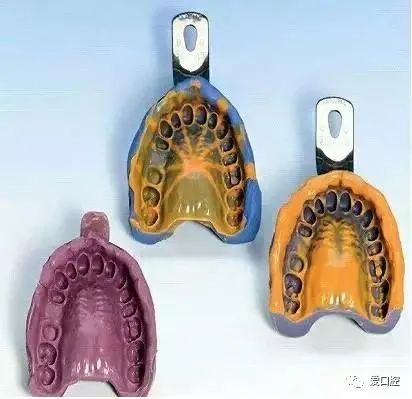
Precautions During Impression Taking
When taking impressions, it is recommended to use stainless steel trays and silicone impression material. Aluminum and plastic trays are prone to deformation, and alginate impression materials are susceptible to slight changes; both are unstable factors that can affect the final model quality. The tray should not have any undercuts to ensure smooth flow of the impression material. During impression taking, ensure a uniform thickness of impression material on the buccal and lingual sides to effectively prevent impression deformation.
Common problems that can occur during tooth preparation:
1. Overhanging margins on the shoulder preparation

When preparing the shoulder margin, the diameter of the bur must be greater than the width of the shoulder margin; otherwise, flash will appear on the edge of the abutment tooth. This flash severely affects the marginal fit of the restoration. Because, when separating the plaster model from the impression tray, the excessively sharp flash is easily damaged, and the technician is also very likely to damage the flash when trimming the shoulder margin. The final results are:
① Affecting the marginal fit of the restoration.
② The restoration cannot be fully seated, resulting in a high bite.
2. Insufficient tooth preparation
Insufficient preparation of the labial surface of the anterior teeth: During the preparation of anterior teeth, the incisal edge should be prepared with a bevel at a 45° angle to the long axis of the tooth. If a bevel is not prepared, there will not be enough space for the porcelain layer, and the restoration will not be able to restore the normal tooth morphology while maintaining the correct color. If the color is to be maintained, the restoration will be tilted labially, and the shape and curvature will be inconsistent with the adjacent teeth. For the best results of the restoration, the amount of labial preparation must meet the requirements.
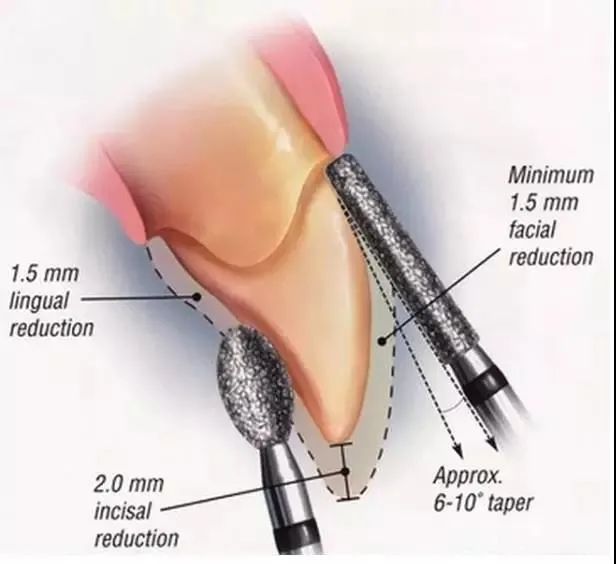
Insufficient occlusal preparation of posterior teeth:
The occlusal surface of posterior teeth should not be flat after preparation; the angle between the lingual slope of the buccal cusp and the buccal slope of the lingual cusp should be an inclined plane of 120-140°.
3. The tooth preparation is complete but has sharp edges.
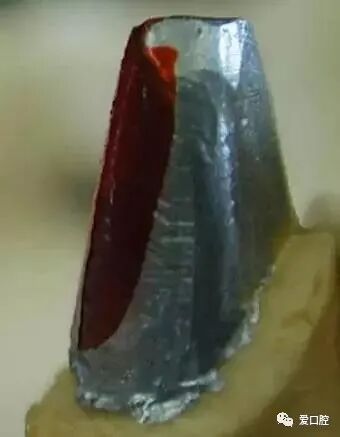
For example, the position of the cut end intersects with the positions of each axis angle (point angle and line angle). If the prepared tooth has sharp angles and edges, the possible consequences are:
① The restoration cannot be fully seated. These sharp angles and edges will become obstruction points because the inner surface of the base crown is smooth and continuous, and there cannot be sharp angles or edges. This is determined by the materials and equipment; the smallest diameter of a zirconia bur is 1.0mm, and the smallest diameter of a manual zirconia bur is 0.6mm.
② If the patient accepts such a restoration, then the completed restoration is prone to chipping during use because these sharp angles and edges will cause stress concentration.
4. Undercuts in the prepared tooth
Undercuts include: undercuts in a single abutment tooth, undercuts between abutment teeth, and undercuts between the abutment tooth and adjacent teeth. When an undercut occurs in a single crown abutment tooth, the undercut area will be filled with plaster during the fabrication process to eliminate the undercut so that the crown can be made. Although the margin is sealed on the model, there will be a gap between the margin of the crown and the abutment tooth in the patient's mouth.
Best Dental Co., Ltd is with more than 10 years experience manufacturing and supplying teeth preparation equipments, such as dental prophy handpiece, prophy motor, dental handpiece. Contact [email protected], Whatsapp +8615347868693.