
The following is a breakdown of the actual application scenarios of AI-assisted diagnosis in dental oral medical devices, combined with technical functions, clinical value and typical cases for analysis:
1. Intelligent image analysis and accurate diagnosis
Automatic detection of caries and periodontal disease
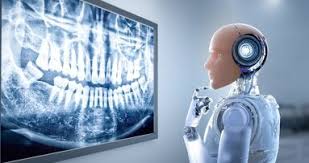
AI uses deep learning algorithms to identify caries and periodontal disease features in X-rays and CBCT images with an accuracy rate of more than 90%. For example, the AI module of 3Shape TRIOS 5 can automatically mark the crown edge line, reducing the doctor's manual marking errors.
Clinical value: shorten the image diagnosis time by more than 40%, and reduce the missed diagnosis rate by 30%.
3D reconstruction and navigation
Based on CBCT and oral scan data, AI generates a 3D jaw model and plans the implant path. For example, the DeepSeek smart body of Keen Oral can automatically identify the direction of the neural canal and avoid high-risk areas.
Technical support: Dynamic occlusal simulation technology can predict the long-term wear of the restoration and optimize the occlusal surface design.
Automated report generation
AI integrates imaging data and patient medical history to generate structured diagnostic reports (such as the degree of alveolar bone absorption and implant status), and doctors only need to fine-tune key conclusions.
2. Treatment planning and surgical assistance
Personalized correction plan design
By analyzing facial aesthetic parameters and dentition scanning data, AI generates multi-dimensional solutions for invisible correction or bracket correction, and simulates the trajectory of tooth movement.
Case: The multimodal intelligent platform of Xi'an Jiaotong University Stomatological Hospital shortens the orthodontic plan design time from 30 minutes to 10 minutes.
Intelligent design of implants and restorations
AI automatically generates three-dimensional models of restorations such as crowns and veneers to meet occlusal and aesthetic needs. For example, 3Shape's AI Design Service can complete single crown design within 2 minutes.
Innovation direction: Based on generative AI, explore topologically optimized implant morphology to improve biocompatibility.
Robot-assisted surgery
The implant robot achieves precise positioning through AI algorithms, and the error is controlled within 0.1mm. For example, the Chinese team has successfully completed AI robot-assisted anterior tooth implant surgery.
3. Multimodal data fusion and risk prediction
Cross-modal data integration
Combining CBCT, facial scanning, and bite electromyography data, AI builds a "virtual patient" model to support interdisciplinary diagnosis and treatment (such as orthodontic-implant combined treatment).
Technical breakthrough: Multimodal data registration standards achieve precise alignment of image, soft tissue and dentition data.
Complication risk modeling
AI analyzes bone density and diabetes-related data to predict implant failure rate or restoration complication risk. For example, the AI module of 3Shape Implant Studio can evaluate the safety of implant guides.
4. Patient management and service optimization
Intelligent guidance and remote monitoring
The guidance robot realizes patient identity authentication and appointment management through face recognition and voice interaction, reducing manual reception costs.
Wearable devices (such as smart toothbrushes) monitor brushing pressure and saliva pH in real time, and AI warns of plaque or caries risks.
Personalized education and decision support
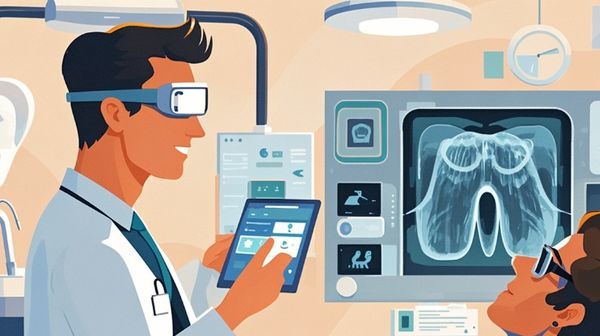
AI generates 3D treatment animations, and AR technology allows patients to intuitively preview the restoration effect (such as Kapanu AR software).
Based on the patient's living habits data, a customized oral care plan (such as brushing frequency, dietary recommendations) is recommended.
5. Digital production and quality control
Automated processing path optimization
AI plans the cutting path of the restoration to reduce material waste and extend tool life. For example, the AI module of Roland DWX-52D shortens the processing time of zirconia by 15%.
Intelligent quality inspection and traceability
The AI visual system compares the design model with the finished product data to detect microcracks or dimensional deviations (accuracy up to 5μm), replacing traditional manual quality inspection.
Challenges and coping strategies
Data security: It must comply with GDPR/HIPAA regulations and use federated learning to protect patient privacy.
Algorithm interpretability: Display the basis of AI decision-making (such as bite force distribution) through heat maps to enhance doctor trust.
Standardization construction: Establish industry standards for oral AI databases (such as ADA SCDI projects) to promote technical compliance.
Summary
AI technology has penetrated the entire process of oral diagnosis and treatment, from imaging diagnosis, surgical planning to patient services. Its core value lies in converting experience into replicable algorithms and releasing clinical productivity. In the future, with the breakthroughs in generative AI and robotics, dental care will move towards a new stage of "super-personalization, high efficiency, and de-skilling".