
Another critical area of radiographic interpretation is the identification of dental anomalies. Anomalies are not disease processes; rather, they represent variations in the morphology of otherwise normal anatomical structures. Typically, they do not require treatment, but accurate diagnosis is essential to rule out actual pathological entities. Some anomalies, however, predispose patients to disease processes such as dental caries, periodontal disease, and pulpal infections. This article presents several anomalies that frequently necessitate endodontic intervention or are often misdiagnosed, leading to unnecessary or inappropriate treatment.
Six Common Dental Anomalies
Microdontia
Microdontia is a term used to describe one or more primary or permanent teeth that appear normal in all respects—except for their size, which is smaller than average. Microdontia can occur in any tooth-bearing region of the jaws and in individuals of any age; it most frequently affects the permanent maxillary lateral incisors and permanent maxillary third molars. Furthermore, microdontia is often associated with conditions such as osteodysplasia, Ehlers-Danlos syndrome (a congenital connective tissue disorder), and Down syndrome. Another specific form of microdontia is the "peg-shaped" lateral incisor—a manifestation of hypoplasia of the maxillary lateral incisor—which typically presents as a non-syndromic, inherited trait (Figure 1).
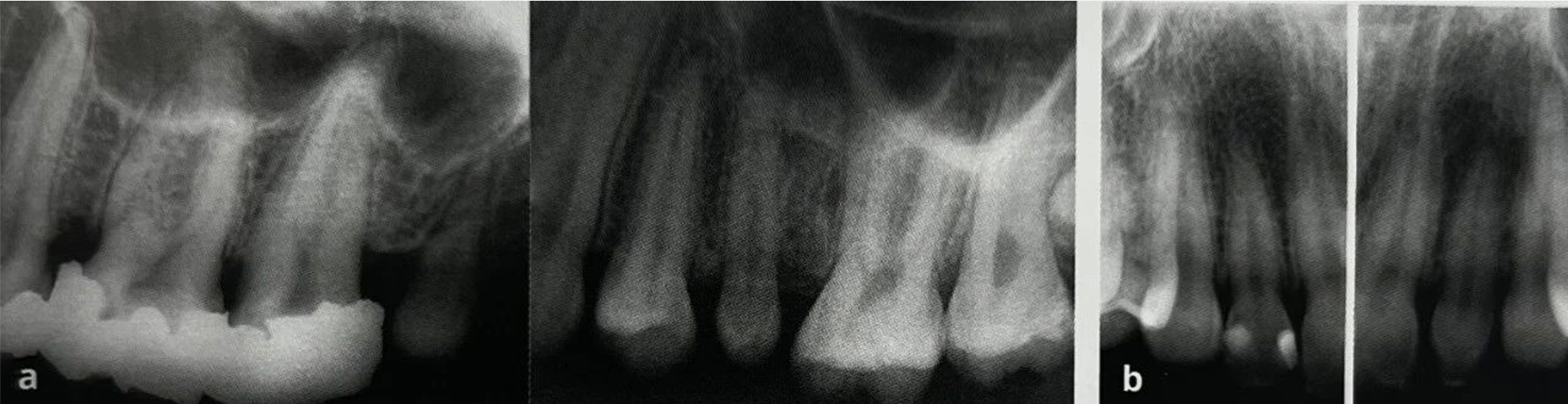
Figure 1: Microdontia. (a) The maxillary third molar and maxillary premolar are significantly smaller than their adjacent molar and premolar counterparts. (b) Tooth 22 exhibits a peg-shaped crown and is microdontic when compared to its contralateral counterpart, Tooth 12.
Dens Invaginatus
Dens invaginatus—also known as "tooth within a tooth"—is a developmental dental anomaly believed to result from the invagination (infolding) of the marginal ridges of the lingual cingulum of maxillary incisors. It occurs most frequently in the maxillary lateral incisors. Radiographically, dens invaginatus appears as an inverted "pear-shaped" radiolucency formed by the invagination of the lingual cingulum's marginal ridges into the gingival sulcus region. This invagination creates a thin layer of enamel and dentin overlying the pulp tissue. Plaque tends to accumulate within this anomalous lingual invagination, where it cannot be effectively removed by routine oral hygiene measures; this significantly increases the risk of dental caries and subsequent pulpal exposure. The occurrence of dens invaginatus is unrelated to gender, age, or ethnicity. When dental caries leads to pulp exposure, the patient typically presents with pain and/or radiographic evidence of a periapical radiolucency (Fig. 2). Prophylactic resin restoration of the lingual cingulum using composite resin can reduce the risk of caries development and subsequent pulp exposure.
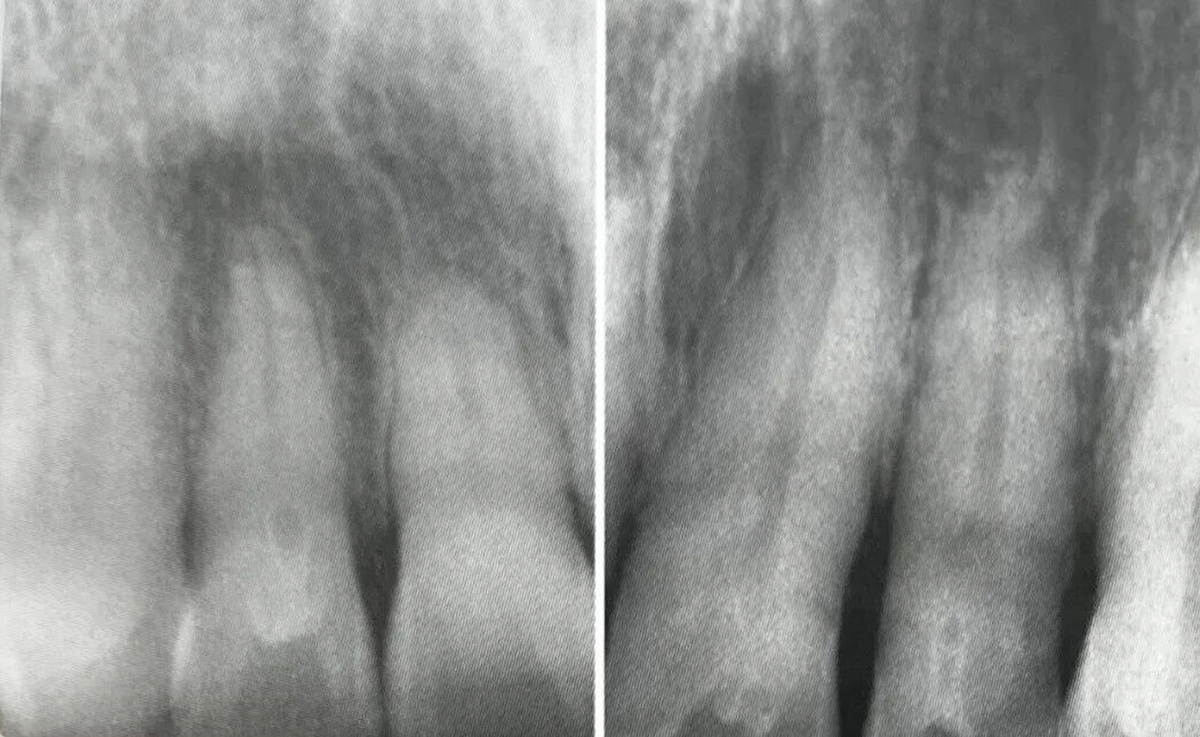
Fig. 2: Periapical radiograph of dens invaginatus. Note the radiolucency extending from the lingual cingulum to the apex of the lateral incisor, as well as the radiopaque outline of the enamel contour.
Pulp Stones
Pulp stones—also known as denticles or endoliths—are round or oval calcified masses that form within the pulp chamber of permanent or primary teeth. Radiographically, pulp stones typically appear as homogeneous, dense, radiopaque masses with well-defined borders. Their diameter can range from 1 mm to a size that completely fills the entire pulp chamber. In clinical practice, their prevalence is independent of age or ethnicity, and they are typically asymptomatic (Fig. 3).
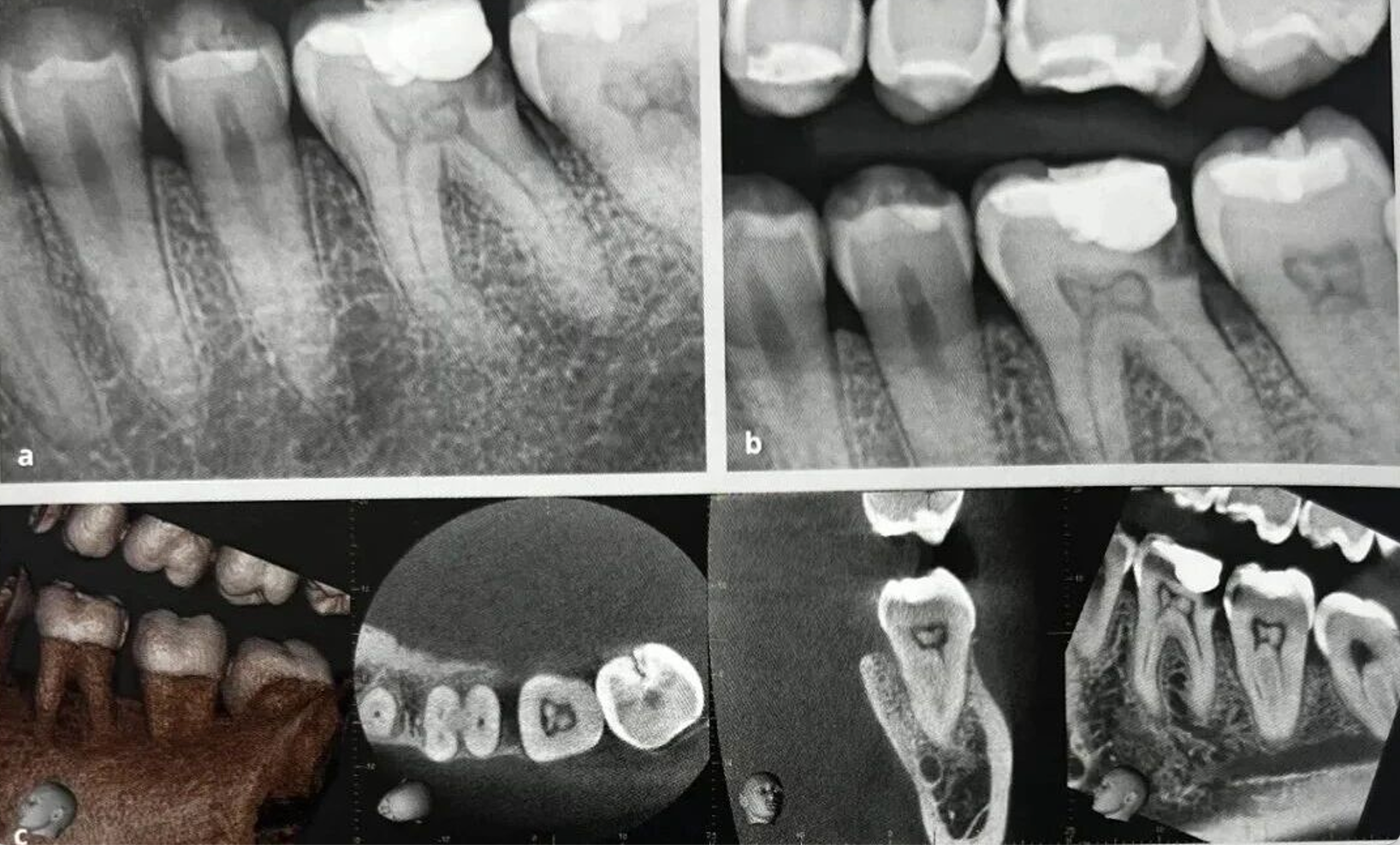
Fig. 3: Periapical, bitewing, and multiplanar CBCT images showing pulp stones in teeth 36 and 37.
Dilaceration
Dilaceration refers to an abnormal distortion of the root or the root-crown junction of a tooth. It is generally accepted that trauma sustained during tooth development is the etiology of this deformity. Dilaceration can occur in both primary and permanent teeth, though it is more frequently observed in permanent dentition. The condition is unrelated to gender or ethnicity and can occur at any age. Aside from the curvature—or excessive curvature—of the root morphology, the external appearance of the tooth typically appears normal. Clinically, since dilacerated teeth are usually asymptomatic, the dilaceration becomes clinically significant only when tooth extraction or root canal therapy is required, as these procedures are rendered more complex by the presence of the curvature (Fig. 4a).
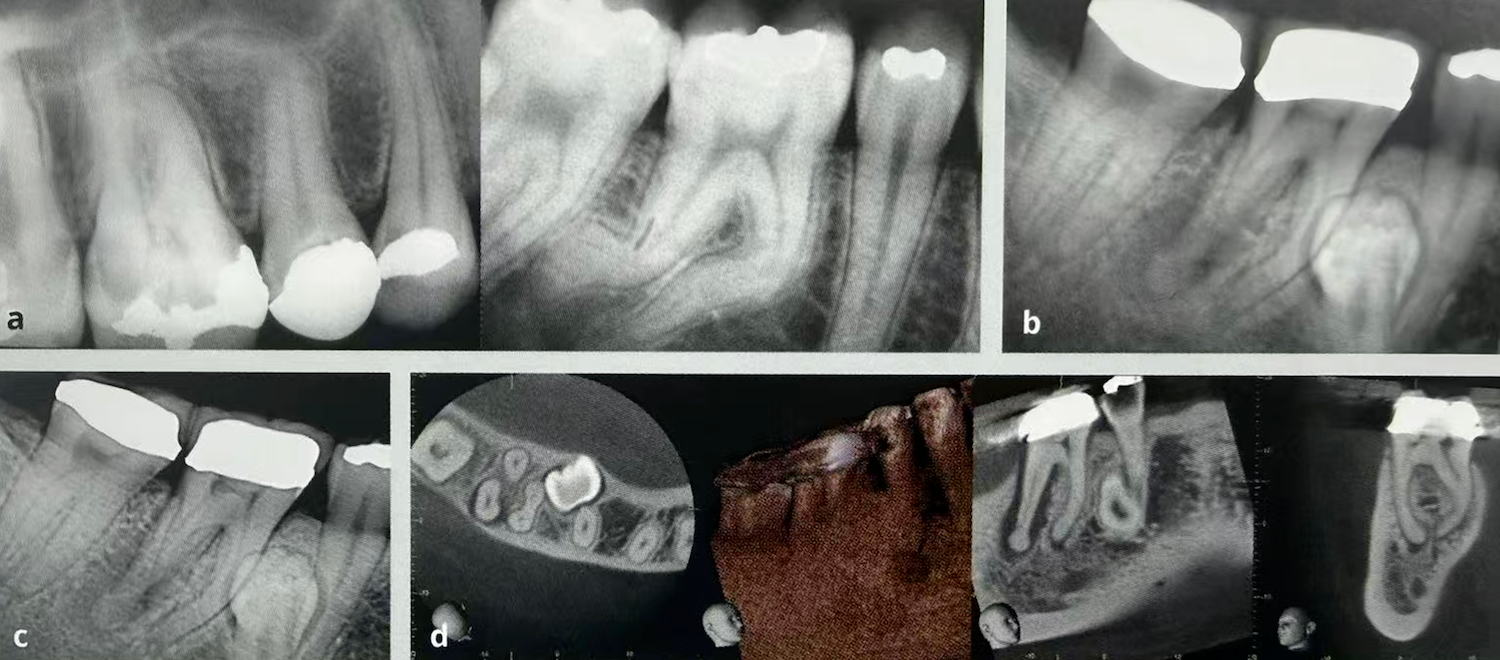
Figure 4: (a) Curved teeth 15, 16, and 46; (b–d) Direct-view periapical radiograph, angled-view periapical radiograph, and multiplanar CBCT images of tooth 46, revealing a periapical abscess and hypercementosis of the distal root, as well as an impacted supernumerary premolar.
Hypercementosis
Hypercementosis—also referred to as cementum hyperplasia—is an alteration in the root morphology of permanent teeth resulting from the excessive deposition of secondary cementum. It is typically described as having a "club-shaped," "bulbous root," or "flame-on-a-matchstick" appearance. Regardless of how the root shape is altered, the normal width of the periodontal ligament space is usually preserved. Secondary cementum may cover the entire root surface or be localized to a specific area. Since cementum is less radiopaque than dentin, the boundary between the two tissues is clearly discernible. Hypercementosis is observed in premolars and molars, with a predilection for the mandible; it shows no association with gender or race and is rarely diagnosed in children under the age of six. Clinically, in the majority of cases, the affected teeth remain vital and asymptomatic. Hypercementosis is often associated with systemic conditions, such as acromegaly and osteitis deformans (Paget's disease). (Figure 5; Figures 4b–d).
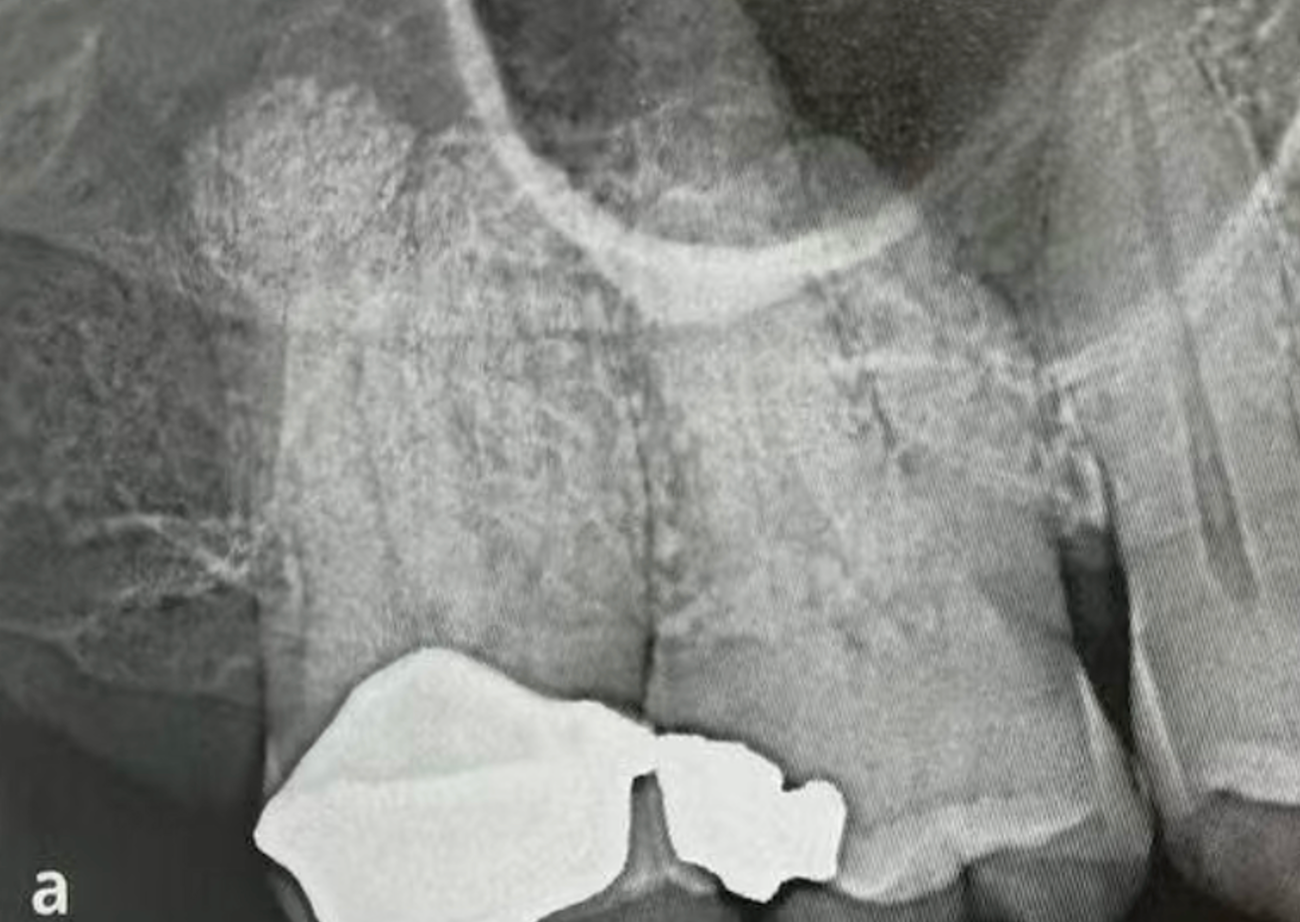
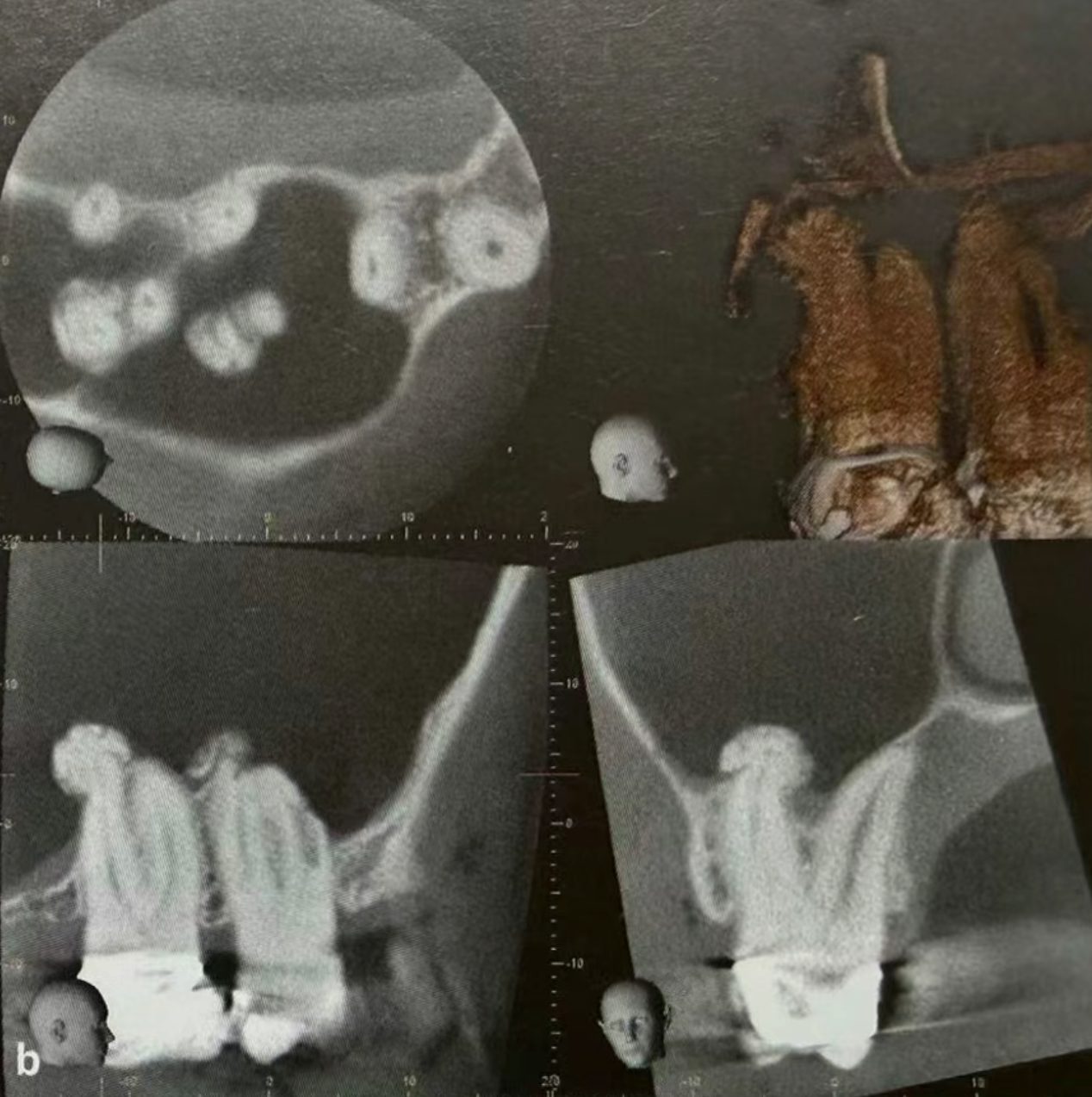
Figure 5: Hypercementosis of the distal root of tooth 17.
Enamel Pearl
An enamel pearl is a small, hemispherical mass of enamel attached to the surface of a permanent tooth. Typically, it presents as a solitary, exophytic structure located at the root furcation or near the cementoenamel junction of multi-rooted teeth, with a particular predilection for maxillary first molars. There is no gender predilection. Radiographically, an enamel pearl appears as a dense, radiopaque protrusion with well-defined contours—either round or ovoid—which may or may not be accompanied by a surrounding lamina dura or a radiolucent space resembling the periodontal ligament. Ovoid enamel pearls typically range in diameter or long-axis dimension from 1 to 5 mm. Clinically, they are usually asymptomatic (Figure 6).
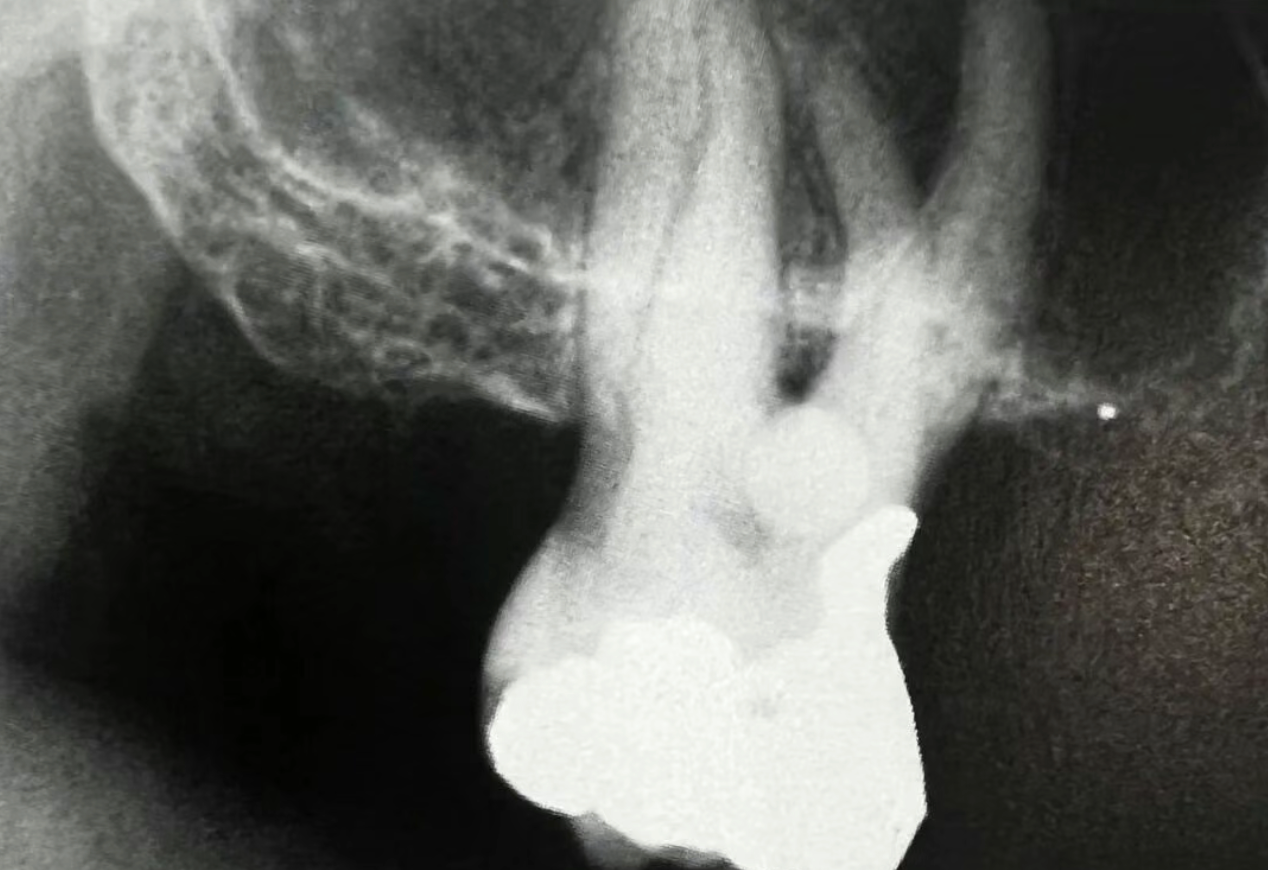
Figure 6: Glaze bead (Courtesy of Dr. Dwight D. Rice)
Book Recommendation
This article excerpt is drawn from the book edited by Mahmoud Torabinejad and Mohammad Sabeti (USA). This volume provides clear and concise guidance on every aspect of the various minor and major complications encountered in root canal treatment. Each chapter offers a detailed description of the etiology of specific complications, explains how to prevent them, and recommends appropriate treatment protocols. Key features of the book include learning objectives and essential references; a systematic approach to each complication, covering prevention, identification, and management; and over 500 high-quality clinical and radiographic images that vividly illustrate the concepts discussed.